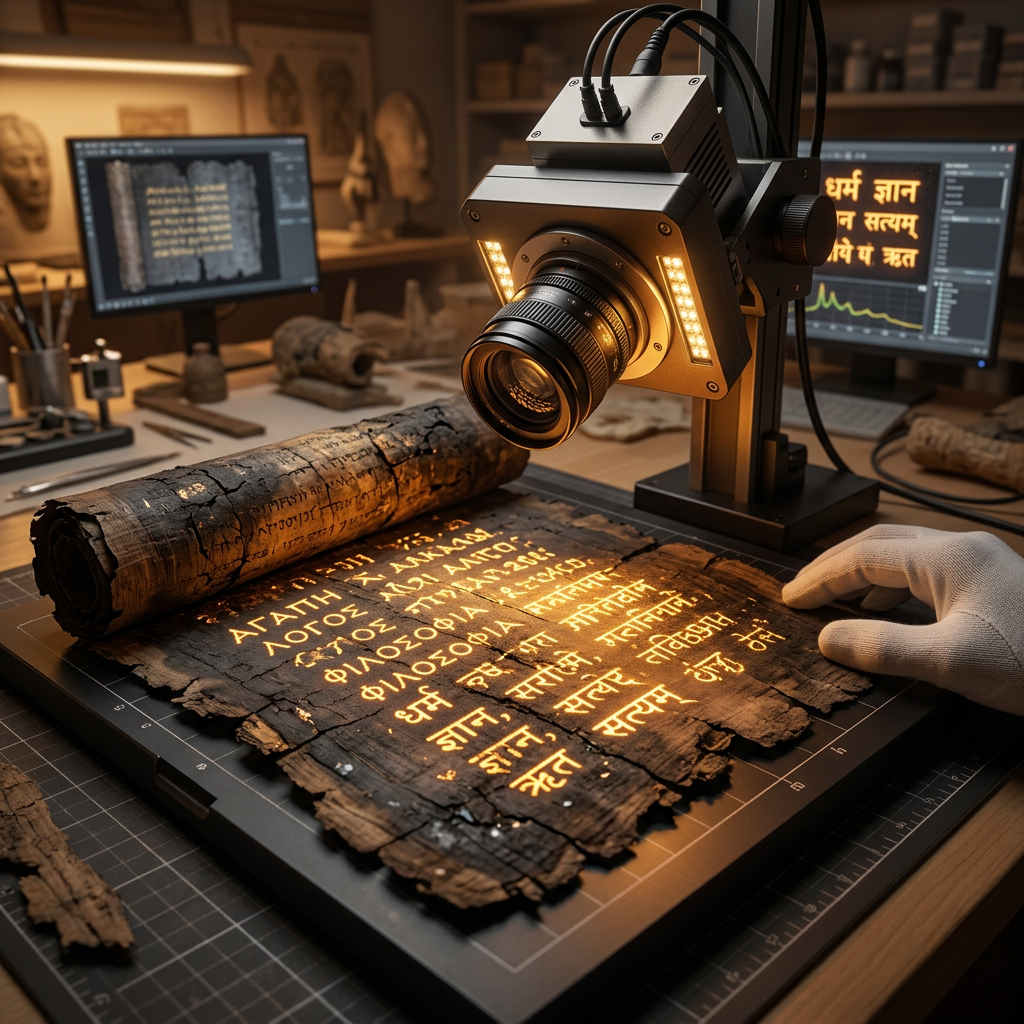
A joint team of Uzbek and international researchers has utilized advanced AI multispectral imaging to decode a fragmented papyrus found in the ruins of Termez. The document, titled the 'Bactrian-Dharma', dates to the 3rd century BCE and appears to be a philosophical dialogue between a Hellenistic Greek traveler and a local Vedic teacher. The text explores the striking parallels between Stoic 'Logos' and the Vedic 'Rta', arguing for a unified principle of cosmic order that governs both nature and human virtue.
This discovery confirms that the Silk Road was not only a conduit for trade but a vibrant laboratory for philosophical syncretism. The manuscript details a shared ethic of 'inner equanimity' (upekkha/apatheia), suggesting that early thinkers from both traditions actively sought a common language to describe the cultivation of a resilient and virtuous mind in a changing world.