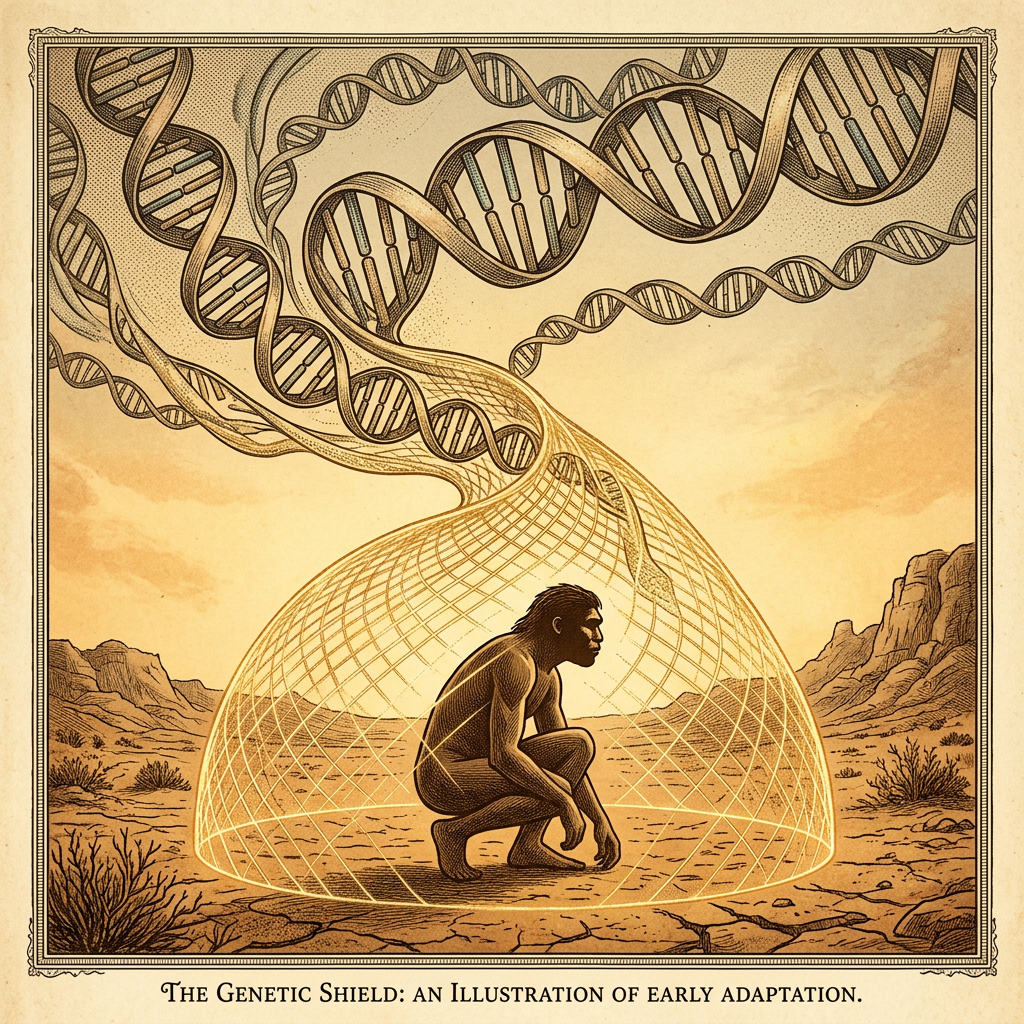
A large-scale paleogenomic study led by the Max Planck Institute has sequenced the DNA of remains found in the Deccan Plateau dating back to 6500 BCE. The research, published in Science Advances, identifies a unique genetic variant in the HSP70 gene family, which is responsible for heat-shock proteins. This variant appears to have provided early inhabitants with a significant survival advantage against the extreme seasonal heat pulses characteristic of the central Indian interior.
This genetic signature is the oldest known instance of physiological adaptation to heat in the Indian subcontinent. The findings suggest that early hunter-gatherer populations in the region were not merely transient but had occupied the plateau long enough to undergo significant evolutionary selection, predating the arrival of the first farming communities in the area by several millennia.