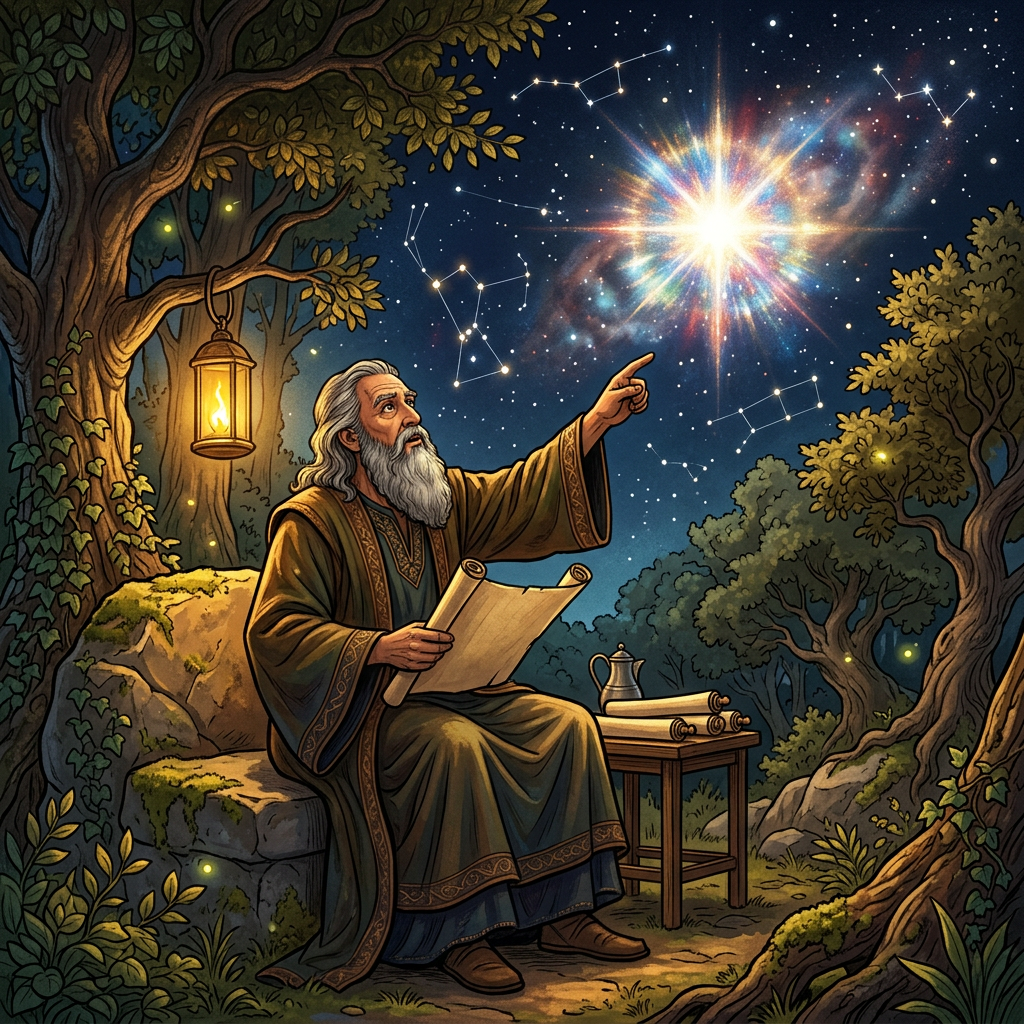
A breakthrough paper published in Nature Astronomy has utilized high-resolution celestial simulations to correlate specific astronomical allegories found in the Kathaka Samhita, a late Vedic text, with a rare supernova event that occurred approximately in 1200 BCE. Researchers from the Indian Institute of Astrophysics (IIA) identified descriptions of a 'second sun' appearing near the 'tail of the celestial serpent,' which matches the calculated position and luminosity of a supernova remnant recently mapped by the Gaia space observatory.
The study suggests that ancient observers possessed a sophisticated system for recording transient celestial phenomena with remarkable spatial precision. By cross-referencing these ritual descriptions with physical evidence from the remnant's expansion rate, the team has proposed a refined chronology for the composition of the middle-period Vedic texts, shifting the traditional timelines to more accurately reflect observational data.