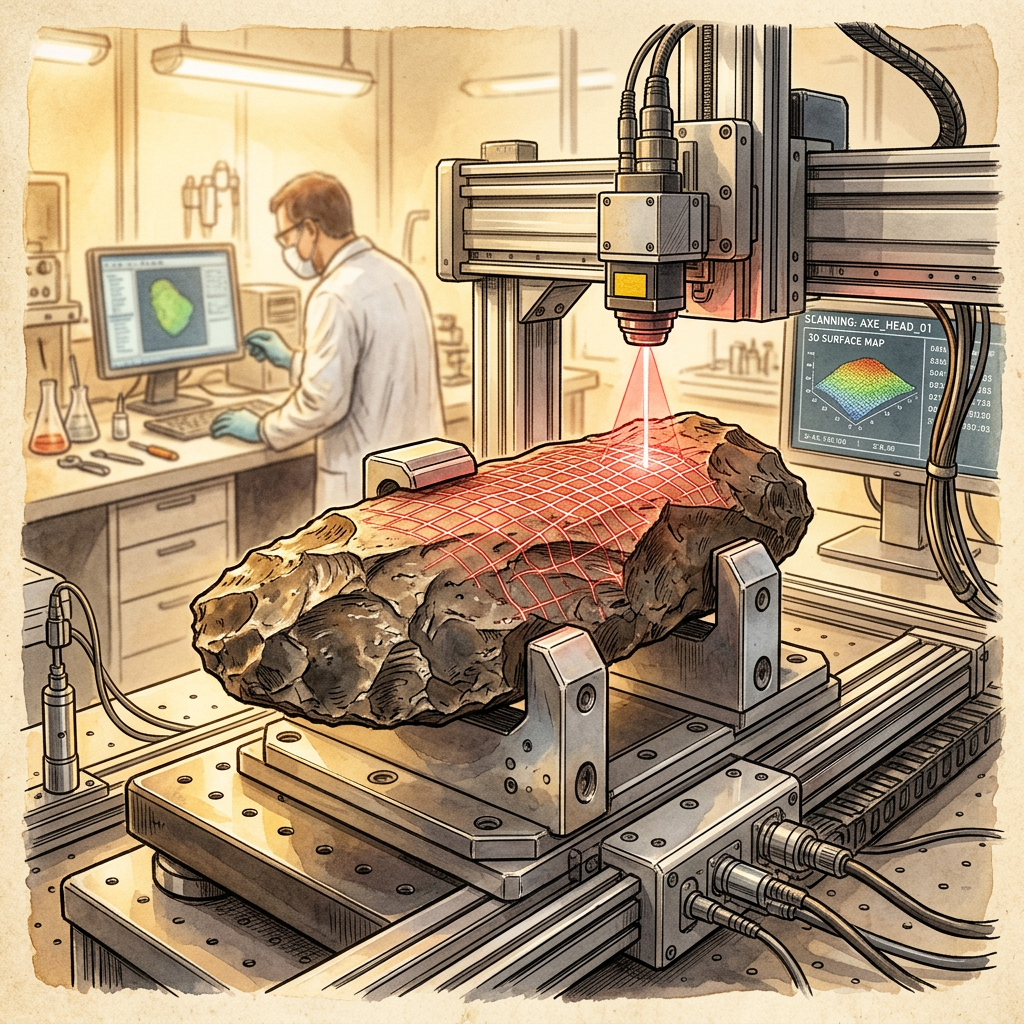
Geochemists have pioneered a new dating technique using Dysprosium-161 isotopes to analyze the mineral inclusions in Neolithic stone tools found in the Son River Valley. This method, which offers a much narrower error margin than traditional radiocarbon dating for inorganic materials, has pushed back the established timeline for permanent human settlement in the region to 7500 BCE, nearly a thousand years earlier than previously thought.
The study, published in the Journal of Archaeological Science, demonstrates that these early communities were utilizing advanced lithic technologies for woodworking and hide processing long before the transition to full-scale agriculture. This new chronology forces a re-evaluation of the 'Neolithic Revolution' in South Asia, suggesting a much slower and more localized evolution of sedentary life.