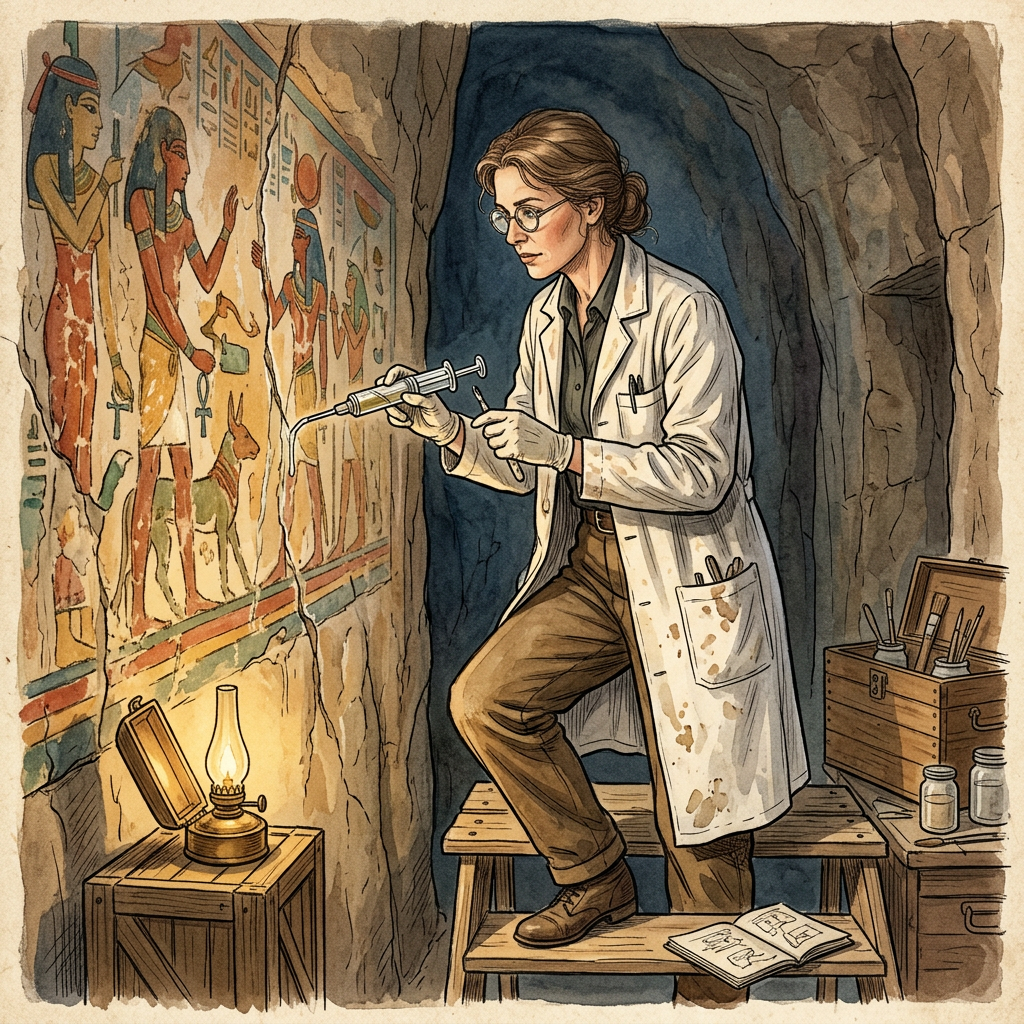
Conservationists in Sri Lanka have achieved a milestone in heritage preservation by deploying a revolutionary Bio-Nanotechnology infusion to save the world-famous 'Cloud Maidens' frescoes at Sigiriya. The 5th-century murals, painted on a sheer rock face, have long suffered from pigment exfoliation due to humidity and chemical weathering. The new treatment involves a calcium-carbonate producing bacteria encapsulated in a nano-gel, which naturally heals microscopic fissures in the plaster without altering the original paint layers.
This innovative approach was developed through a partnership between the University of Moratuwa and the UNESCO World Heritage Centre. By allowing the bacteria to 'regrow' the structural integrity of the fresco substrate, the team has avoided the use of traditional synthetic resins, which often trap moisture and cause long-term damage. Following the successful trial on the main gallery, the technology is now slated for deployment at other vulnerable cave-temple sites across South Asia.