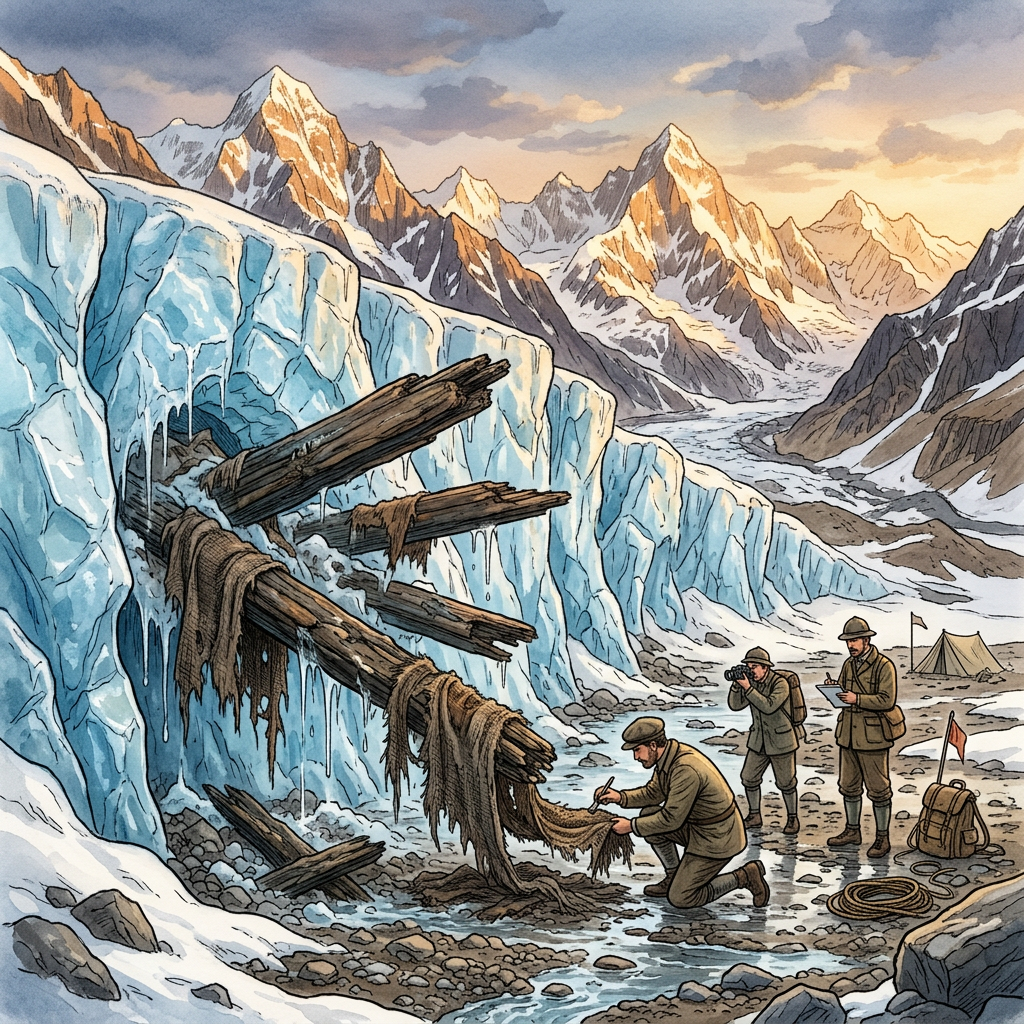
Rapidly retreating ice in the Karakoram Range has exposed a perfectly preserved 1,500-year-old high-pass shelter once used by Silk Road merchants. Unlike previous finds, this site includes an extraordinary cache of Khotanese and Sanskrit manuscripts written on birch bark, preserved for centuries by the freezing conditions. The documents appear to be commercial ledgers and travel diaries detailing the hazardous journey between the Tarim Basin and the Gandharan plains during the late 6th century CE.
The excavation, led by a multinational team of climate archaeologists, also recovered organic materials including wool felt boots, wooden bowls, and dried apricots, offering an intimate look at the daily lives of ancient travelers. Researchers noted that the shelter's location on a previously unknown high-altitude bypass route indicates that ancient traders were highly adaptable to changing mountain climates. An emergency extraction mission was launched to retrieve the artifacts before exposure to UV light and oxygen could degrade the fragile organic fibers.