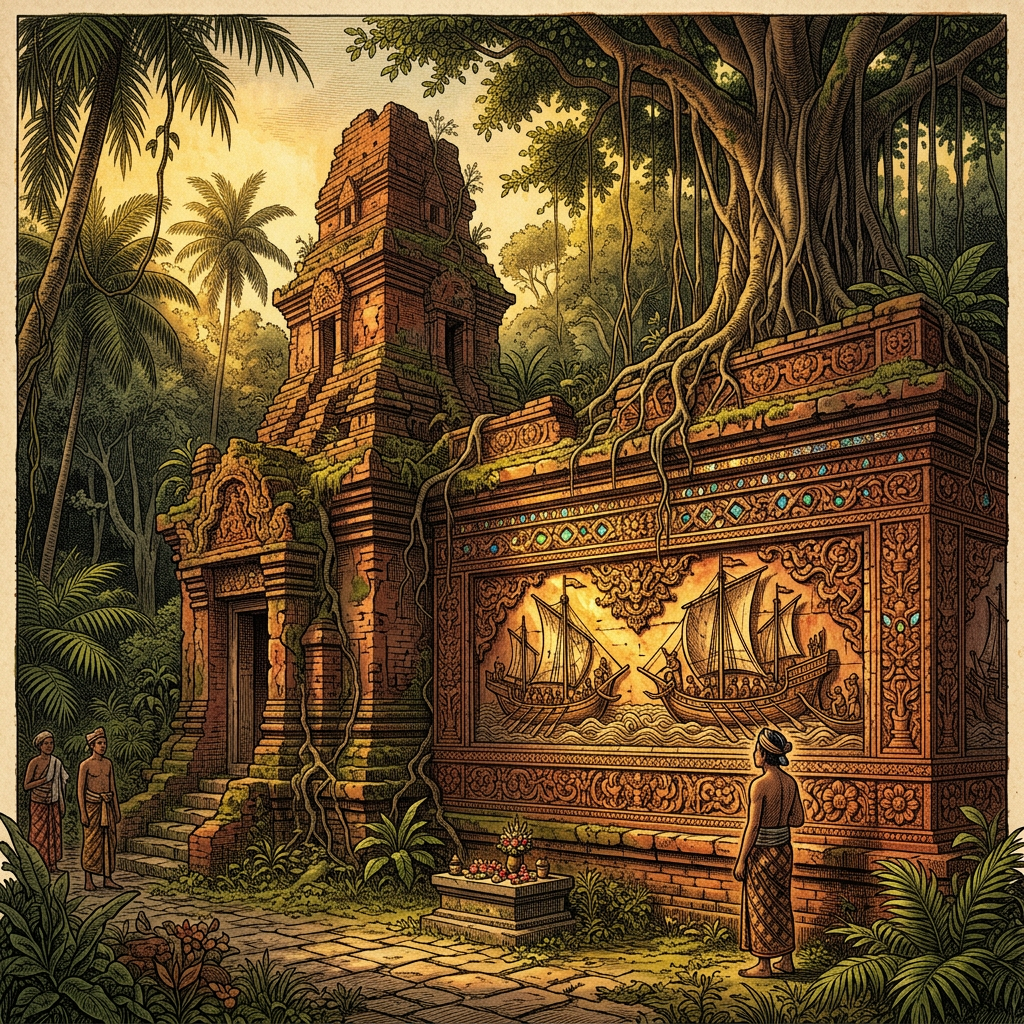
Researchers in Indonesia have identified the ruins of a 9th-century maritime temple linked to the powerful Srivijaya Empire. Located near the Musi River in South Sumatra, the temple was built using a combination of brick and volcanic stone. Its most distinguishing feature is the presence of glass-inlaid stucco reliefs, a decorative technique previously unrecorded in Srivijayan architecture. These reliefs depict scenes of naval expeditions and maritime trade, underscoring the empire's dominance over the Melaka Straits.
The temple's layout follows a mandala pattern, with a central stupa-like structure surrounded by smaller shrines. Among the ruins, archaeologists found fragments of Persian pottery and Chinese coins, providing physical evidence of the vast trade networks that converged at this sacred site. The discovery challenges previous theories that Srivijayan temples were solely made of perishable materials, suggesting a more robust tradition of stone and brick sacred architecture than previously assumed.