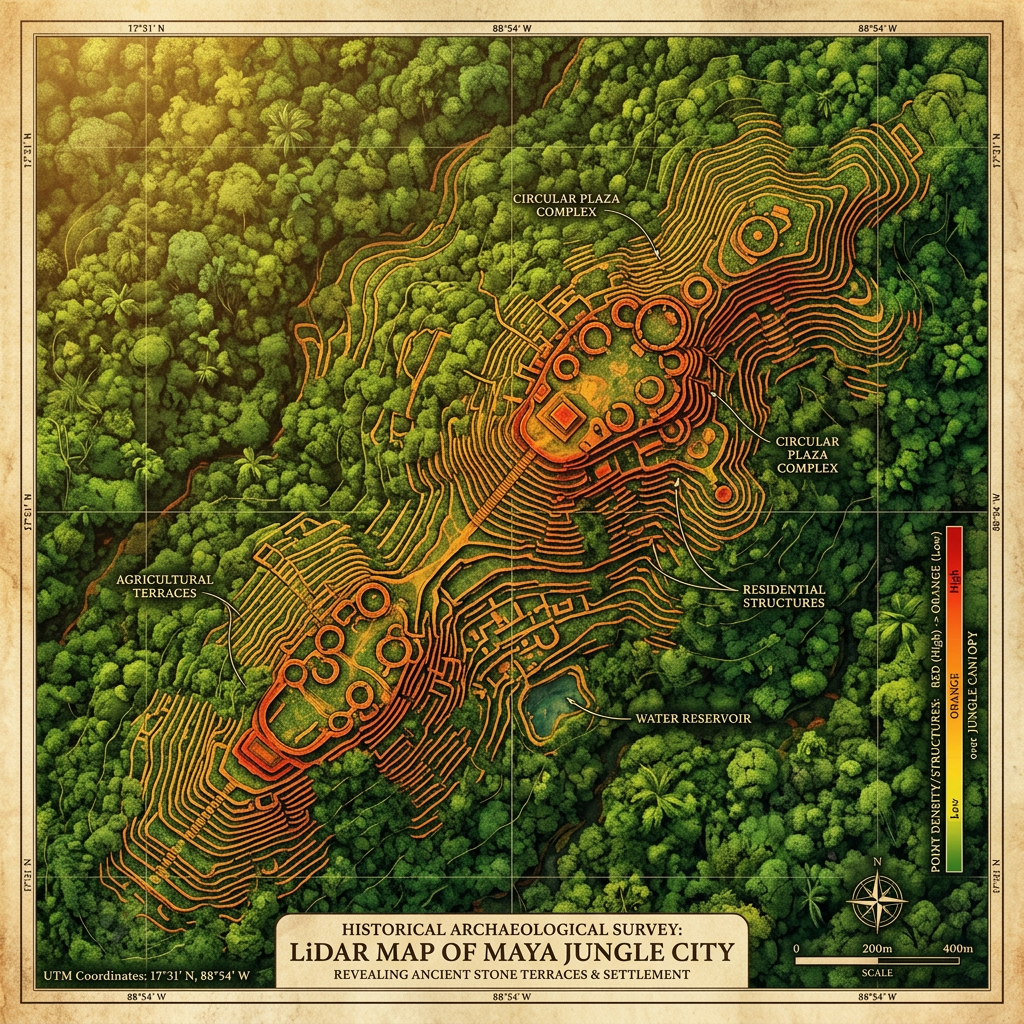
A high-resolution LiDAR survey conducted in the rugged Chiapas highlands has revealed a massive, previously unknown industrial hub of the Classic Maya civilization. The data identifies a series of concentric terraced plazas specifically designed for the large-scale processing of Ceiba (silk-cotton) fibers. These structures include specialized stone drying racks and circular stone vats that researchers believe were used for softening the raw fibers before they were spun into luxury textiles for the elite.
The site, tentatively named Ceibal-Ha, suggests that the Maya developed sophisticated vertical industrial zones to take advantage of specific microclimates in the mountains. The presence of fortified watchtowers surrounding the processing plazas indicates that fiber production was a high-value state asset, protected from neighboring rival city-states during the turbulent 9th century. This discovery shifts the narrative of Maya industry from domestic-level weaving to centralized, large-scale manufacturing centers.