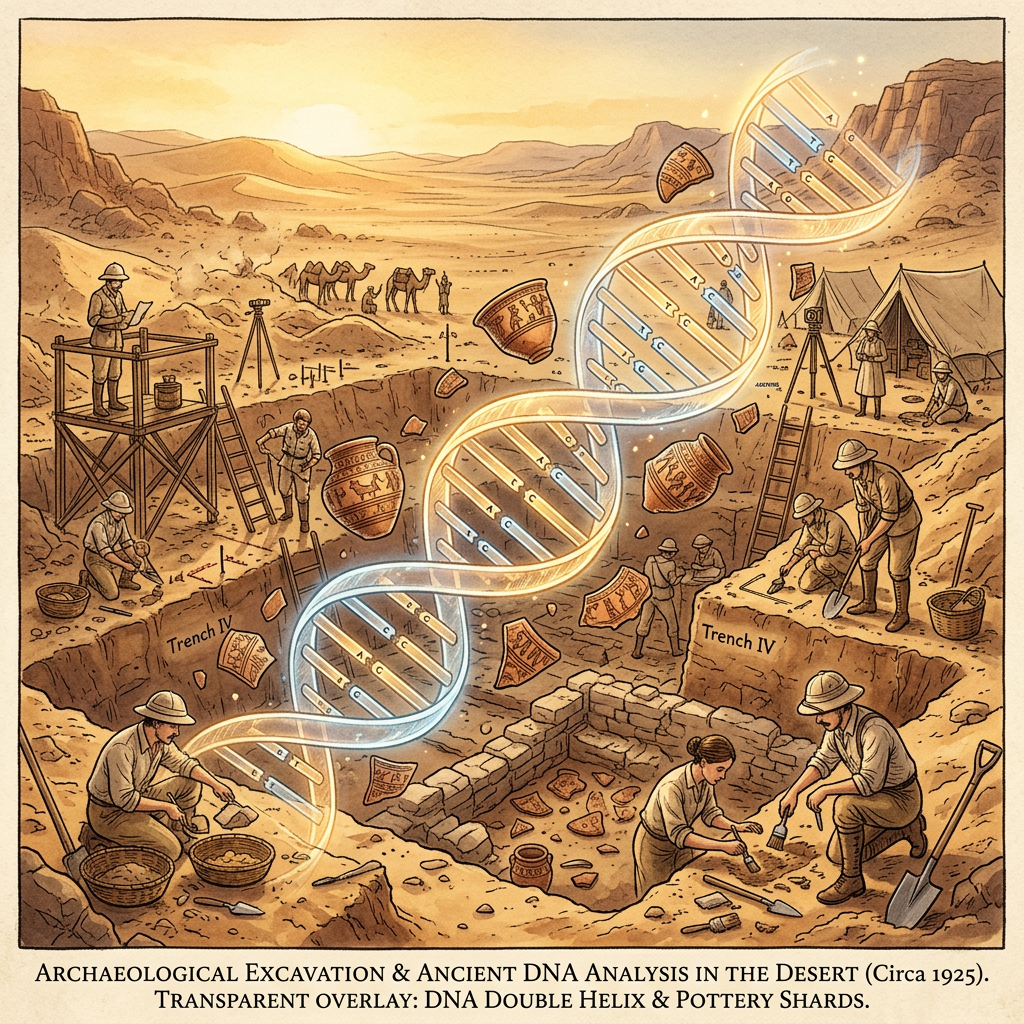
Scientific research published in Cell Reports has unveiled the genomic history of a previously unstudied population from the Ghaggar-Hakra frontier. The analysis of 4,500-year-old skeletal remains from the Cholistan Desert reveals a unique genetic signature characterized by selection in genes responsible for water-retention metabolism and high-salinity dietary tolerance.
This study confirms that the inhabitants of the peripheral Indus sites were not merely migrants from the urban centers but a distinct lineage that had thrived in the arid-riverine ecotone for generations. The genomic data provides a new perspective on how ancient South Asian communities adapted to the volatile hydrological shifts that defined the late 3rd millennium BCE, offering clues to their resilience during the desertification of the region.