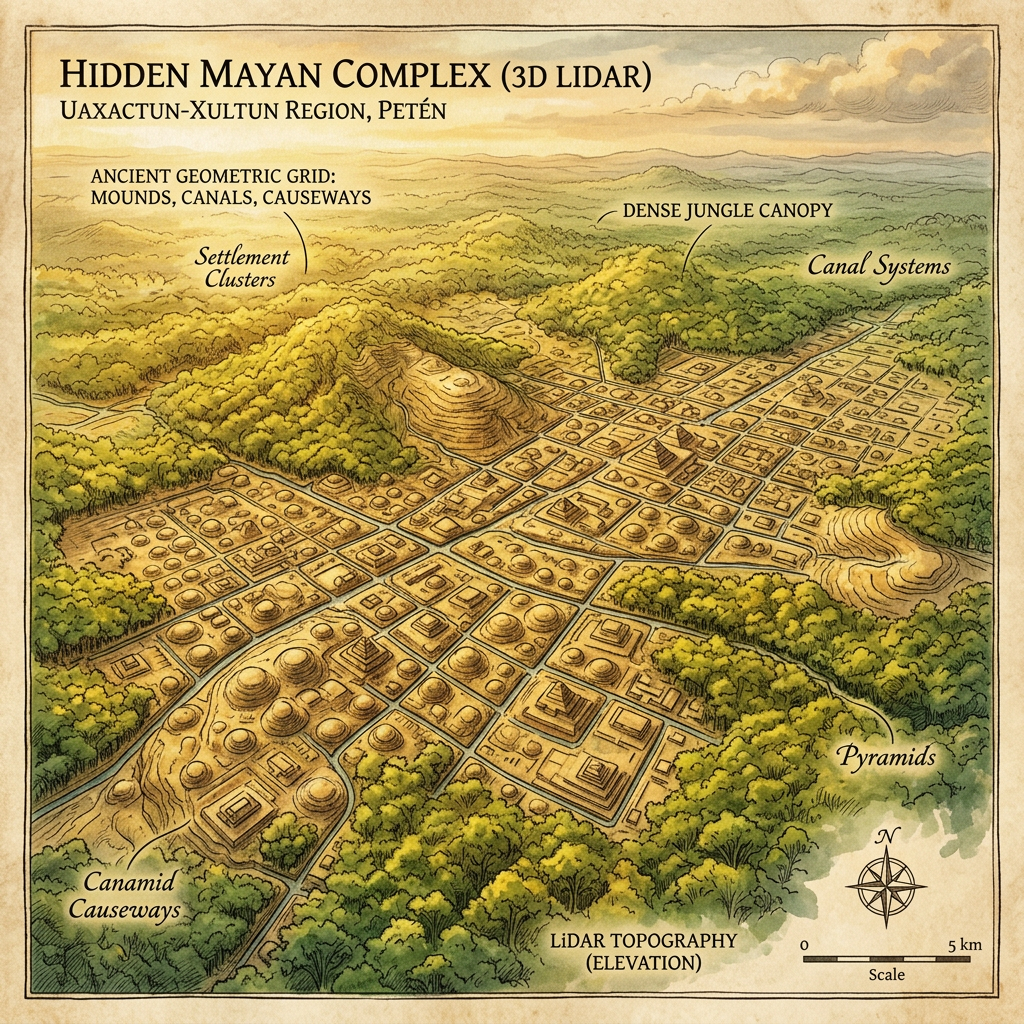
High-resolution LiDAR scans of a remote section of the Big Cypress National Preserve have uncovered a massive, previously unknown urban complex belonging to the Calusa culture. The data reveals an intricate network of artificial islands, shell mounds, and deep canals designed to manage fluctuating water levels in the wetlands. This site, spanning over 200 acres, appears to have functioned as a strategic military and administrative fortress guarding the interior trade routes of the Florida peninsula.
Unlike other Mississippian cultures that relied on agriculture, the Calusa at this site developed a sophisticated fisher-hunter-gatherer society capable of supporting thousands of residents. The LiDAR imagery shows large ceremonial plazas and a series of defensive ramparts built entirely from millions of discarded mollusk shells. Archaeologists are planning a ground expedition to verify the residential zones and recover ceramic samples for carbon dating.