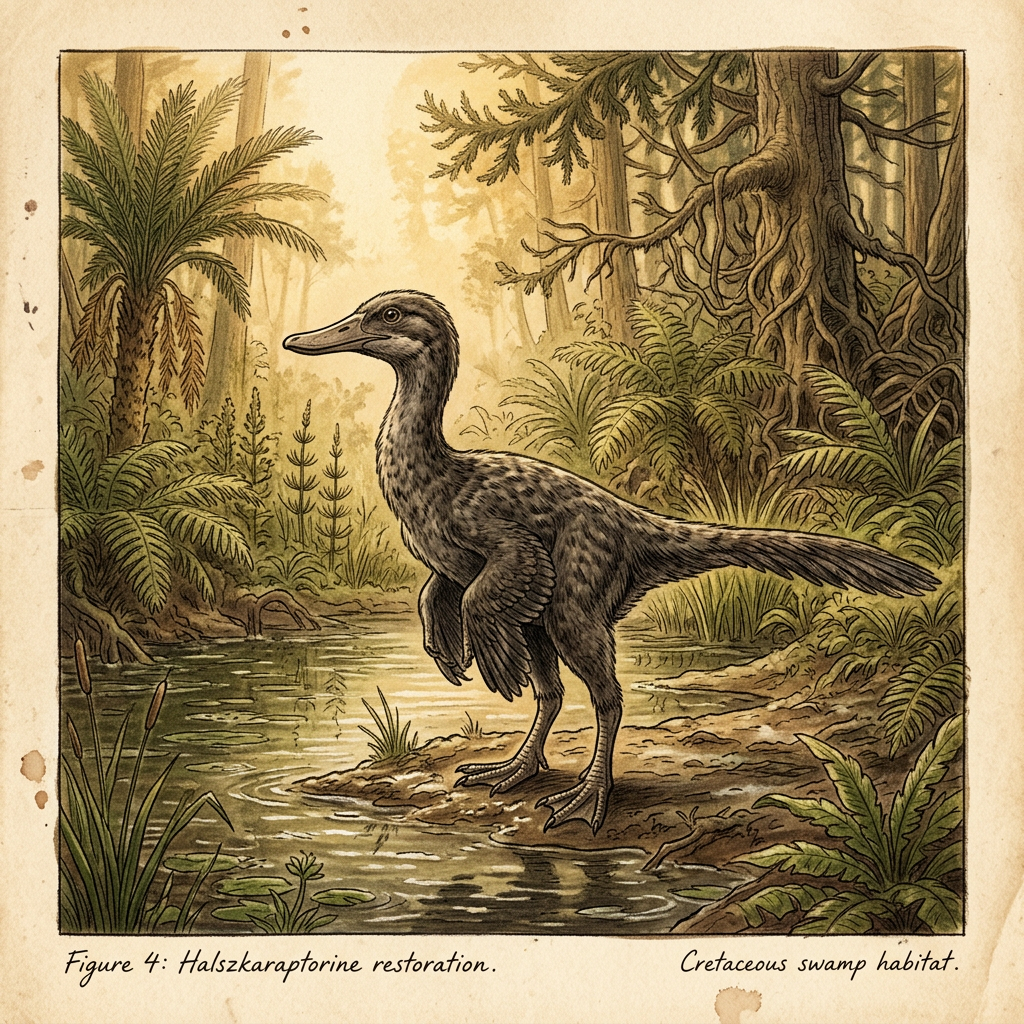
A team of scientists from the Indian Statistical Institute has announced the discovery of a new species of feathered dinosaur that exhibits early anatomical features of modern waterfowl. Found in the fossil-rich Gangapur Formation, the specimen, named Anasavis deccanensis, lived during the Early Cretaceous period and possessed a broad, flat beak adapted for filter-feeding in ancient freshwater lagoons. This find suggests that the evolutionary lineage leading to ducks and geese may have had significant roots on the Indian subcontinent.
The fossil is remarkably complete, preserving impressions of primitive feathers and specialized webbing between the toes. Researchers believe this species represents a 'missing link' between small theropods and the more specialized aquatic birds of the Late Cretaceous. The discovery challenges previous models that placed the origin of diverse avian lifestyles primarily in Laurasia.