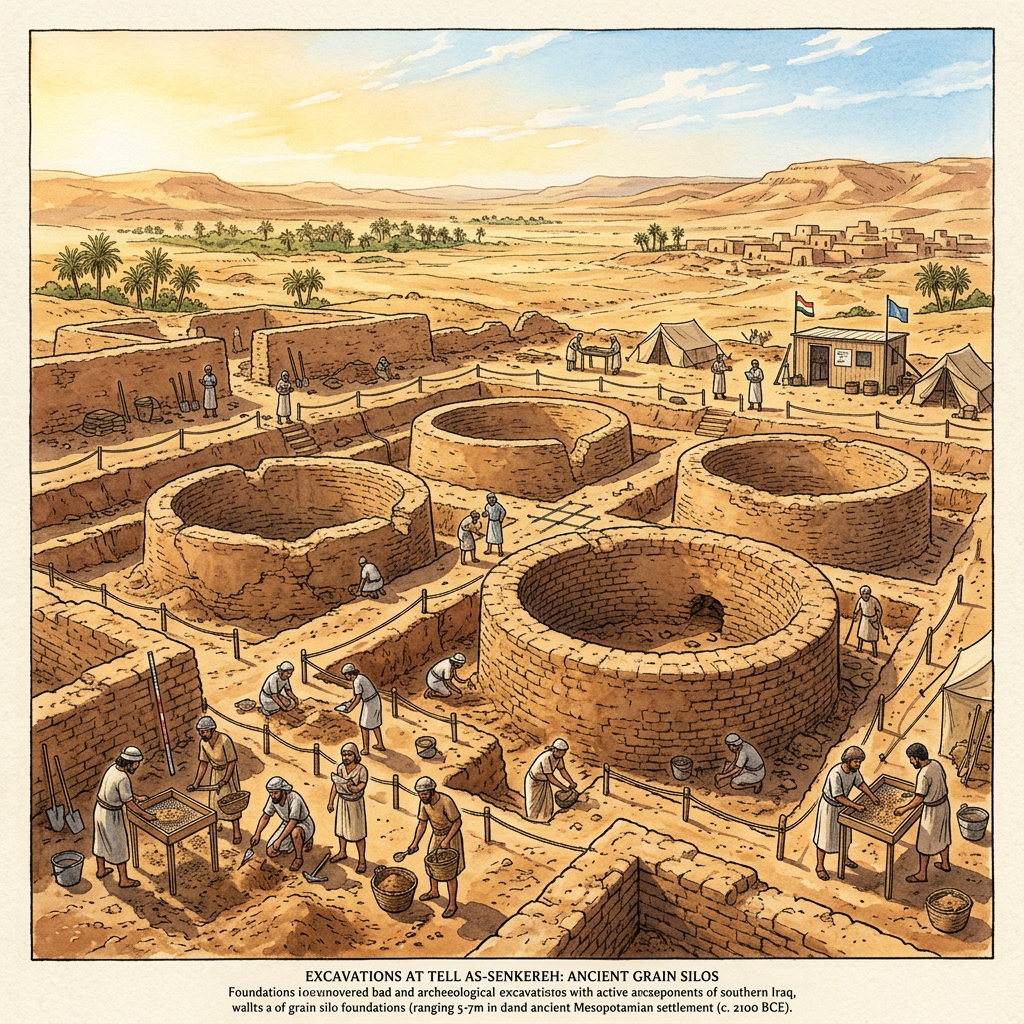
A joint Iraqi-European mission has excavated a monumental mud-brick structure at the site of Tell al-Muqayyar, identifying it as a dedicated central granary and commercial exchange. The complex includes several rows of beehive-shaped silos and a central archive chamber containing over 400 cuneiform tablets. These documents record the daily distribution of barley and wheat to temple workers and local artisans during the Ur III period, offering unprecedented detail into the logistics of early urban food security.
The site is unique for its integrated water-cooling system, which used underground clay pipes to circulate marsh water and keep the grain dry and cool. This sophisticated hydraulic engineering demonstrates the advanced environmental adaptations of Sumerian architects. The team also found several standardized copper weights and stone seals used to verify transactions, highlighting the site's role as a major economic hub for the region.