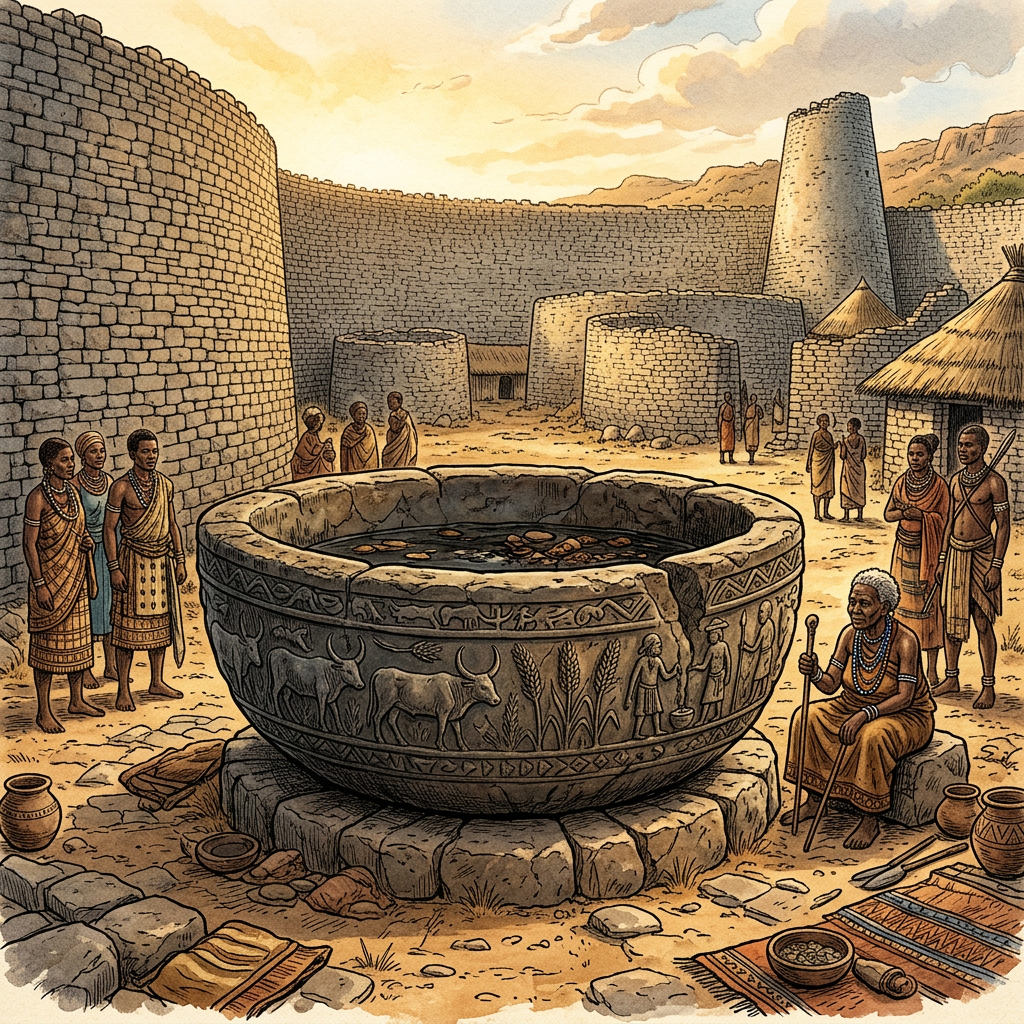
A LiDAR-guided survey of the outer enclosures at Great Zimbabwe has led to the discovery of several massive soapstone-carved festival basins. These basins, positioned to reflect the light of the rising harvest moon, were likely used for ritual libations and the communal washing of sacred seeds before planting.
The basins are decorated with relief carvings of horned cattle and grain stalks, emphasizing the importance of fertility and pastoral wealth in the kingdom's festive calendar. Researchers state that the placement of these artifacts confirms a sophisticated understanding of lunar cycles used to coordinate region-wide agricultural celebrations.