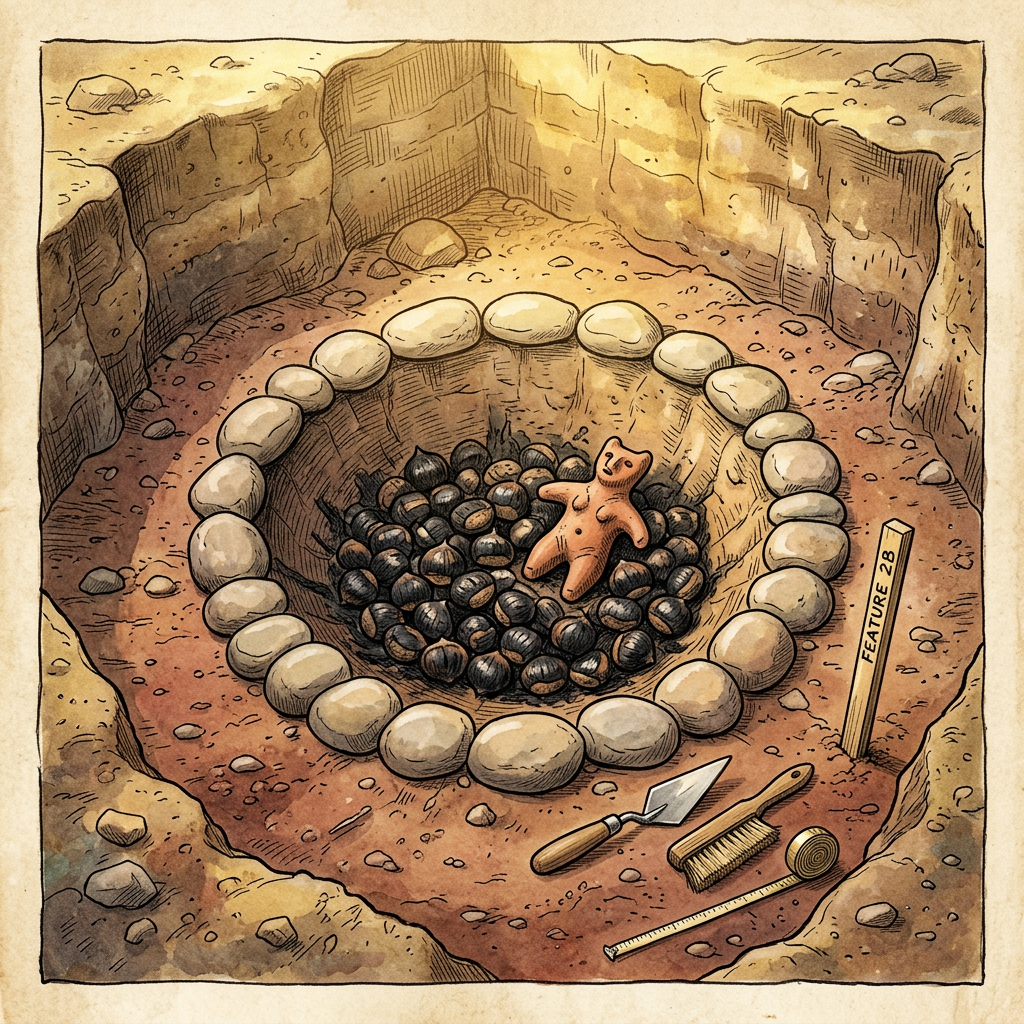
In the Tohoku region of northern Japan, archaeologists have excavated a series of stone-lined offering pits filled with carbonized chestnuts and small clay effigies. These pits, dating back to the Middle Jomon period, represent the earliest evidence of a Chestnut-Gathering Festival, a ritual event held to ensure the community's survival through the long winter months.
The effigies found in the pits appear to represent forest spirits, and the deliberate arrangement of stones suggests the site was a permanent sanctuary for seasonal gatherings. This discovery highlights the deep prehistoric roots of Japan's autumn harvest traditions and the sacred status of the chestnut tree in early foraging societies.