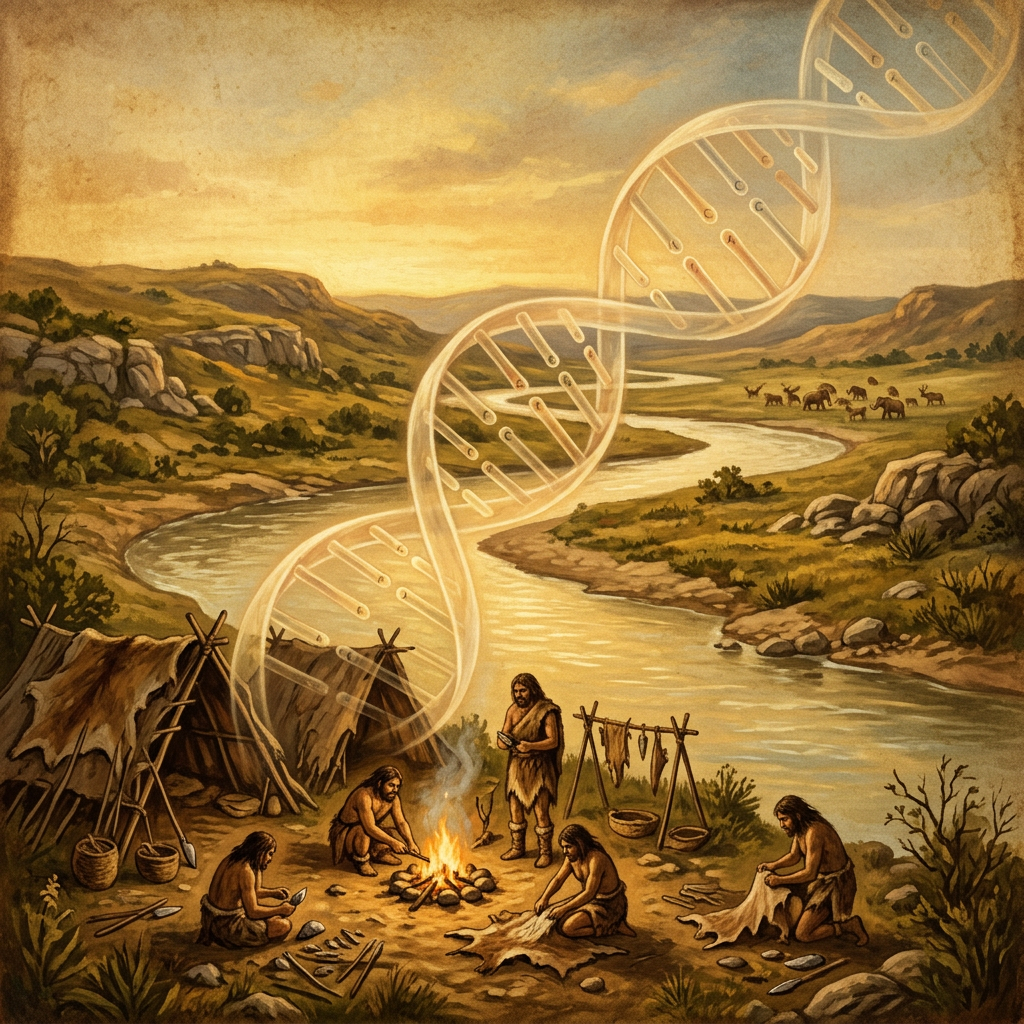
New research published in Nature Human Behaviour details the genomic analysis of skeletal remains found in the Godavari Basin, dating back to the late Pleistocene. The study identifies a unique genetic divergence in these early South Asian hunter-gatherers, specifically linked to the selection of alleles that provided resilience against toxins produced by endemic algal blooms in the riverine ecosystem.
This finding suggests that early human populations in the Indian peninsula underwent rapid genetic adaptation to unique localized ecological challenges. The study also maps a previously unknown 'ghost lineage' that significantly contributed to the genetic landscape of modern tribal communities in Central and Southern India, highlighting the deep antiquity of local ancestral continuity.