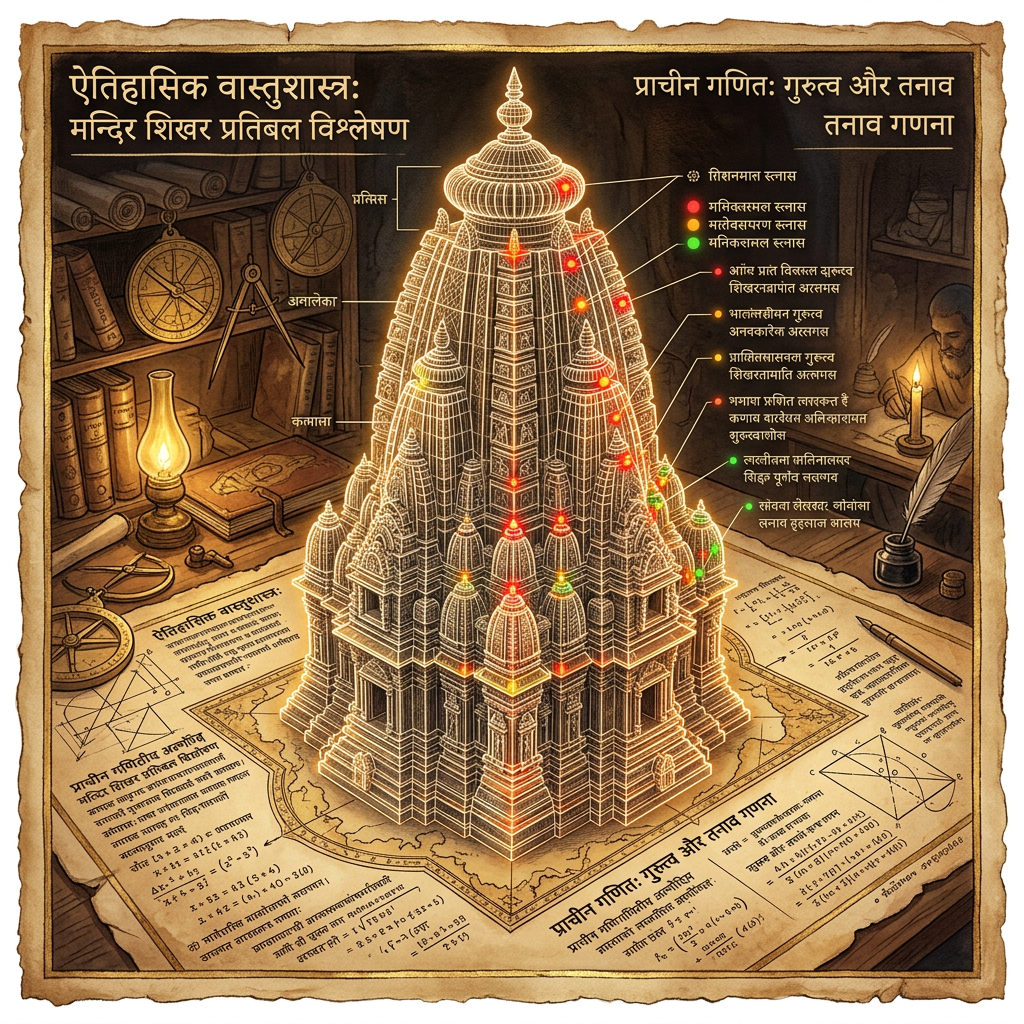
A new computational analysis of the Ganita-Tilaka, a 10th-century mathematical treatise, has uncovered a series of previously overlooked algorithms for modeling non-linear geometric torsion. Published in the Journal of Computational Archaeology, the study demonstrates how these Sanskrit mathematical methods were utilized to calculate the structural stability of twisting architectural elements in the construction of massive temple spires.
By applying modern finite element analysis to the Sanskrit equations, researchers found that the ancient algorithms achieved a high degree of precision in predicting stress distribution. This suggests that the builders of the Chandela and Paramara dynasties used advanced recursive series to ensure the structural integrity of complex rock-cut and masonry architectures.