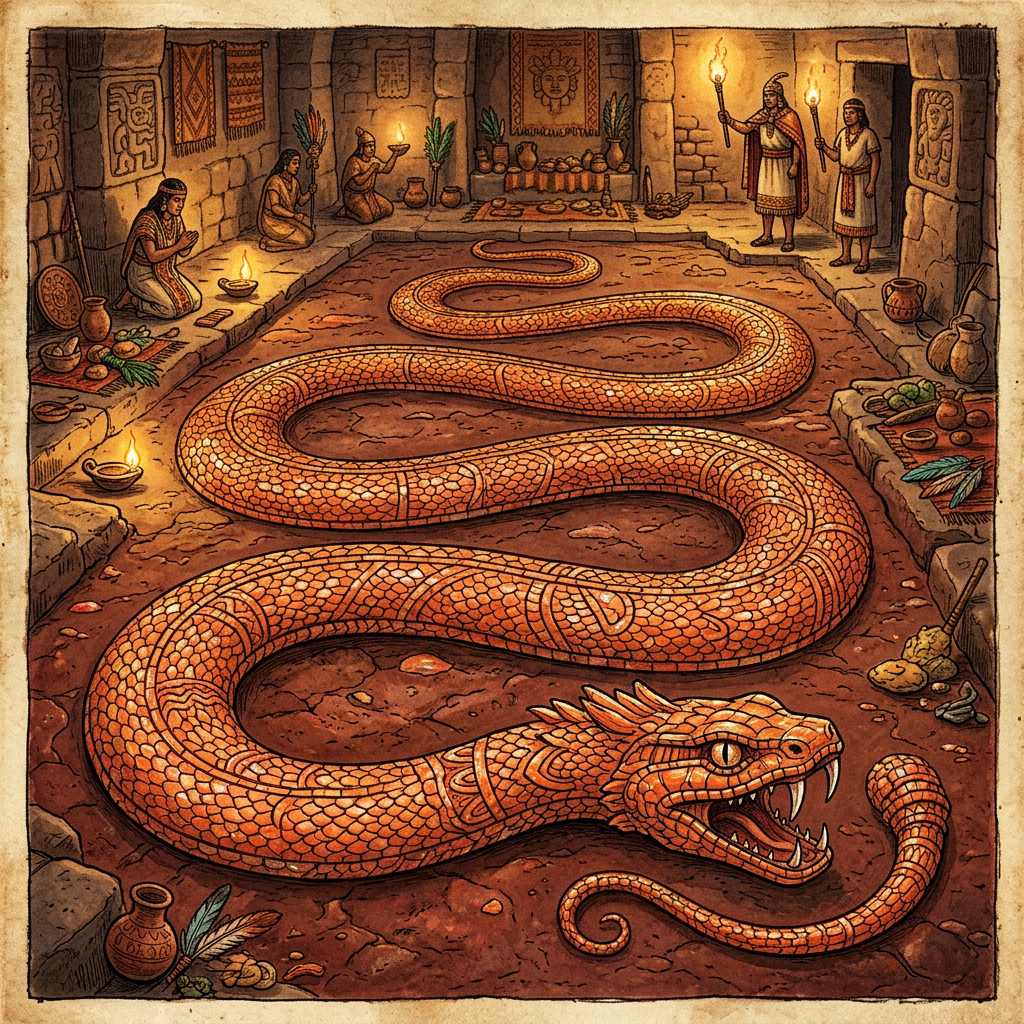
A joint team of Peruvian and international archaeologists has unearthed a monumental ritual pavement at the coastal site of El Paraíso. The structure, which dates back approximately 3,000 years, is uniquely decorated with thousands of Spondylus shell fragments inlaid into the clay flooring to form a massive depiction of a multi-headed sea serpent.
Researchers believe this site served as the primary staging ground for a previously unknown 'Festival of the Sea-Serpent', where coastal communities gathered during the autumn equinox to offer prayers for a successful fishing season. The discovery of burnt residue from exotic resins and sea-bird feathers suggests that these ceremonies involved elaborate smoke rituals and masked performances that celebrated the intersection of marine life and spiritual mythology.