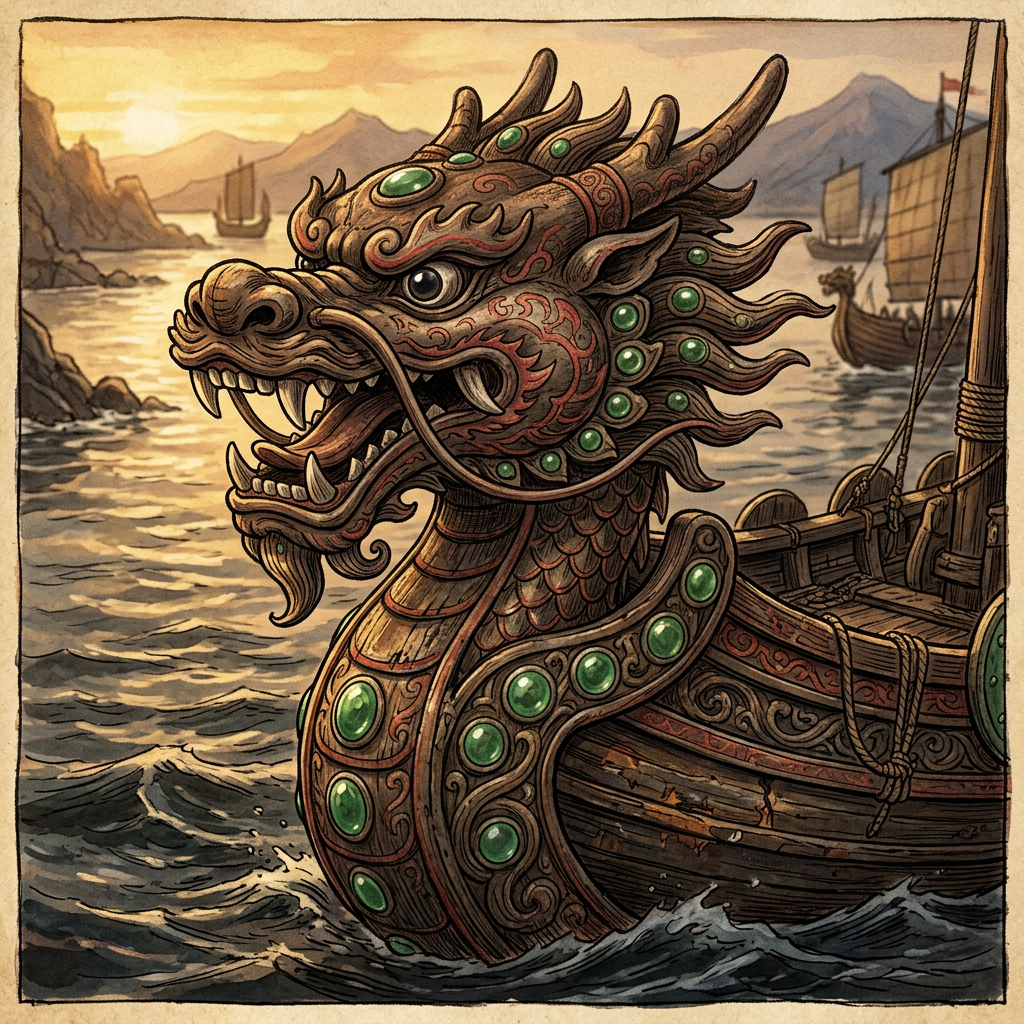
Excavations at the Liangzhu-related site of Maoshan in Zhejiang Province have yielded significant artifacts that pre-date documented records of Chinese river festivals. Archaeologists discovered the remains of a wooden boat prow adorned with meticulously carved jade discs and evidence of vermilion pigment, suggesting a ceremonial rather than functional purpose.
The orientation of the vessel fragments within a canal system indicates they were used in high-status communal gatherings. Experts theorize these gatherings were the earliest precursors to 'River-Spirit' racing festivals, where rival villages would showcase their craftsmanship and navigation skills in a ritualized display of power and piety intended to appease the deities governing the regional waterways.