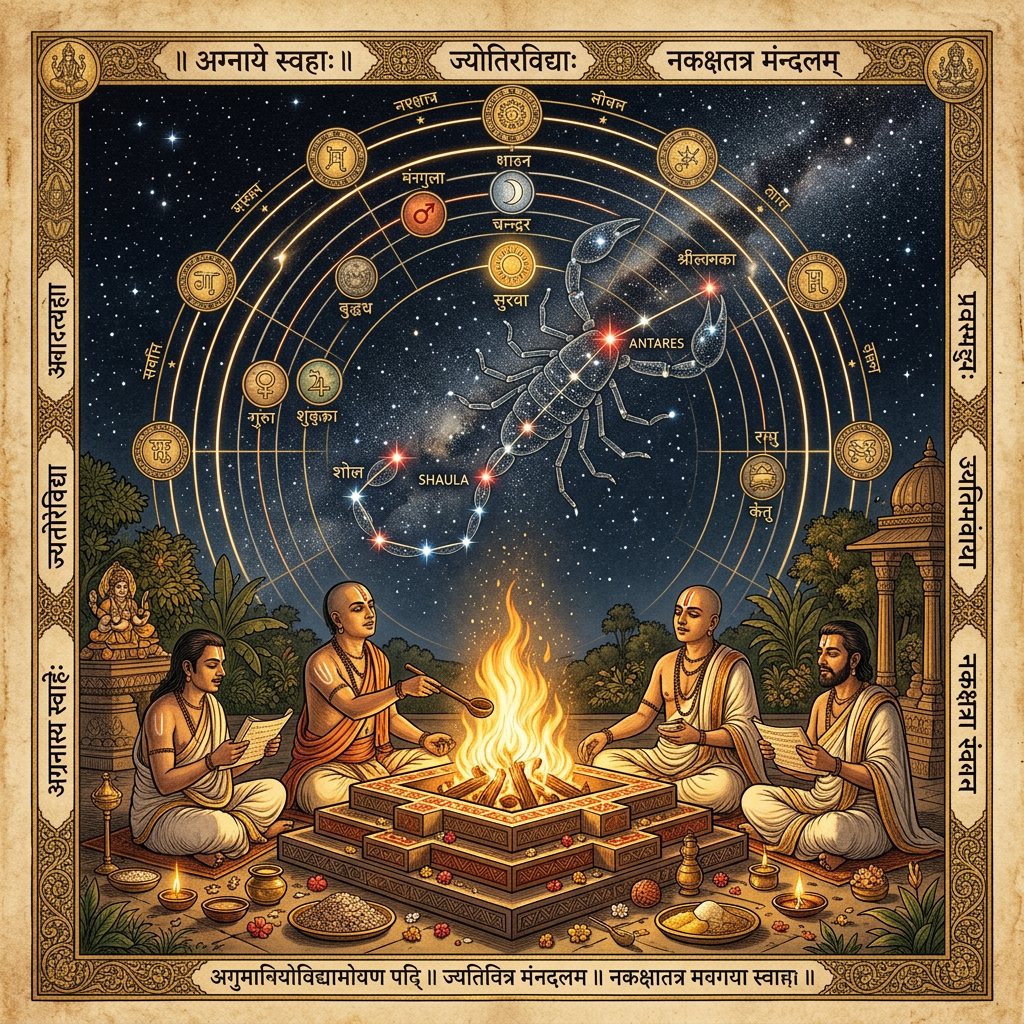
A new interdisciplinary study published in Archaeoastronomy Today has established a direct link between specific ritual descriptions in the Shukla Yajurveda and a rare celestial event. By using high-resolution astronomical simulations, researchers have identified a double planetary occultation of Mars and Jupiter by the Moon occurring in the constellation of Mula (Lambda Scorpii) during the 2nd millennium BCE. The ritual layers describe specific offerings and geometric altar alignments that mirror the spatial configuration of the planets during this event.
The study argues that the meticulous detail in the Vedic verses regarding the relative luminosity and positions of the celestial bodies suggests a tradition of long-term, high-precision observational astronomy. This correlation provides a firm anchor for the chronology of Vedic ritual texts and validates the astronomical heritage of the period. The findings suggest that the Vedic Rishis were using these rare alignments as chronological markers for the construction of elaborate fire altars, integrating mathematical geometry with celestial cycles.