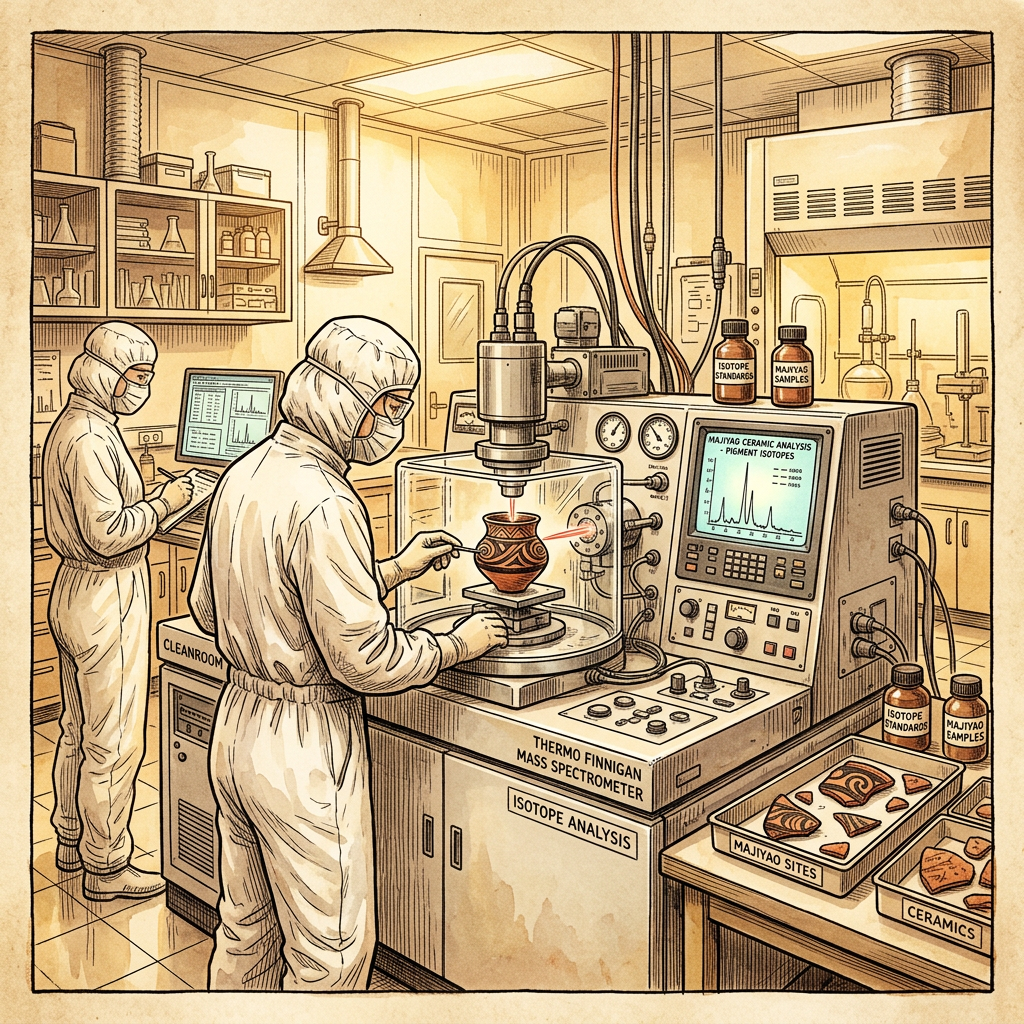
Researchers at the Center for Isotopic Research have announced the development of a new dating methodology using Ytterbium-176 isotopic chronometry. This high-precision technique has been applied to the Majiayao culture sites in China's Loess Plateau, refining the timeline of their transition from Neolithic to Copper Age practices. The new data places the start of specialized ceramic and early metallurgical production at precisely 3400 BCE, nearly two centuries earlier than previously estimated using conventional radiocarbon methods.
The Ytterbium-176 method is particularly effective for dating high-fired ceramic residues and slag materials where organic carbon is absent. By measuring the ratios of rare-earth isotopes within the mineral structure of artifacts, the team was able to bypass the calibration fluctuations associated with atmospheric carbon. This breakthrough provides an unprecedented level of sub-decadal precision for the Eastern Neolithic, offering new insights into the rapid socio-technical shifts that occurred during the onset of the Bronze Age.