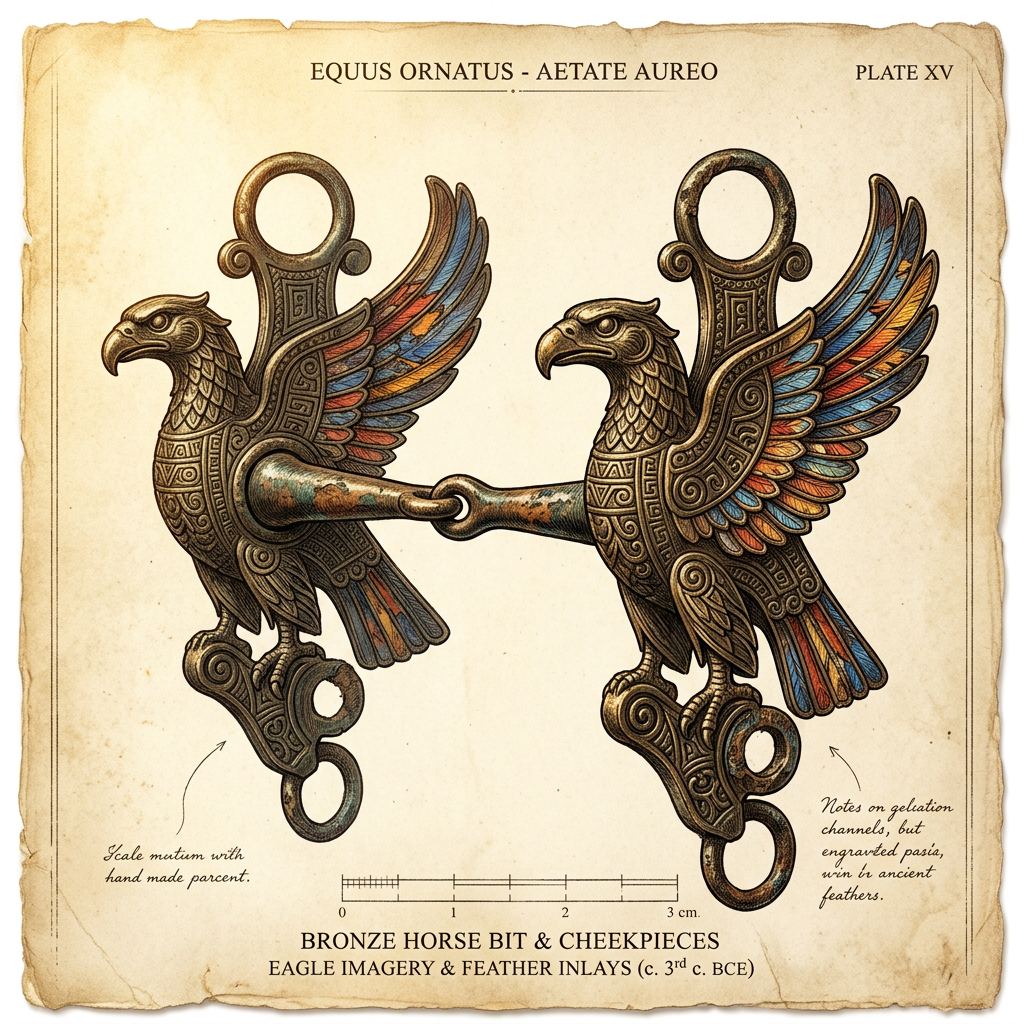
New excavations in East Kazakhstan have yielded a set of Saka-period horse trappings featuring rare organic preservation of eagle and crane feathers. These "feather-inlaid" bronze bits and cheekpieces were found in a ritual deposit at the edge of a massive kurgan, or burial mound. The style of the artifacts suggests they were used specifically for ceremonial equestrian games held during the spring equinox to symbolize the return of migratory birds and life to the steppe.
The find provides a missing link in the history of Central Asian equestrian festivals, showing that the tradition of "Nauryz" or similar spring rites involved highly specialized, decorative regalia for horses. The biological analysis of the feathers confirms that the birds were ritually captured and released as part of a wider "rebirth" narrative common to Iron Age nomadic civilizations.