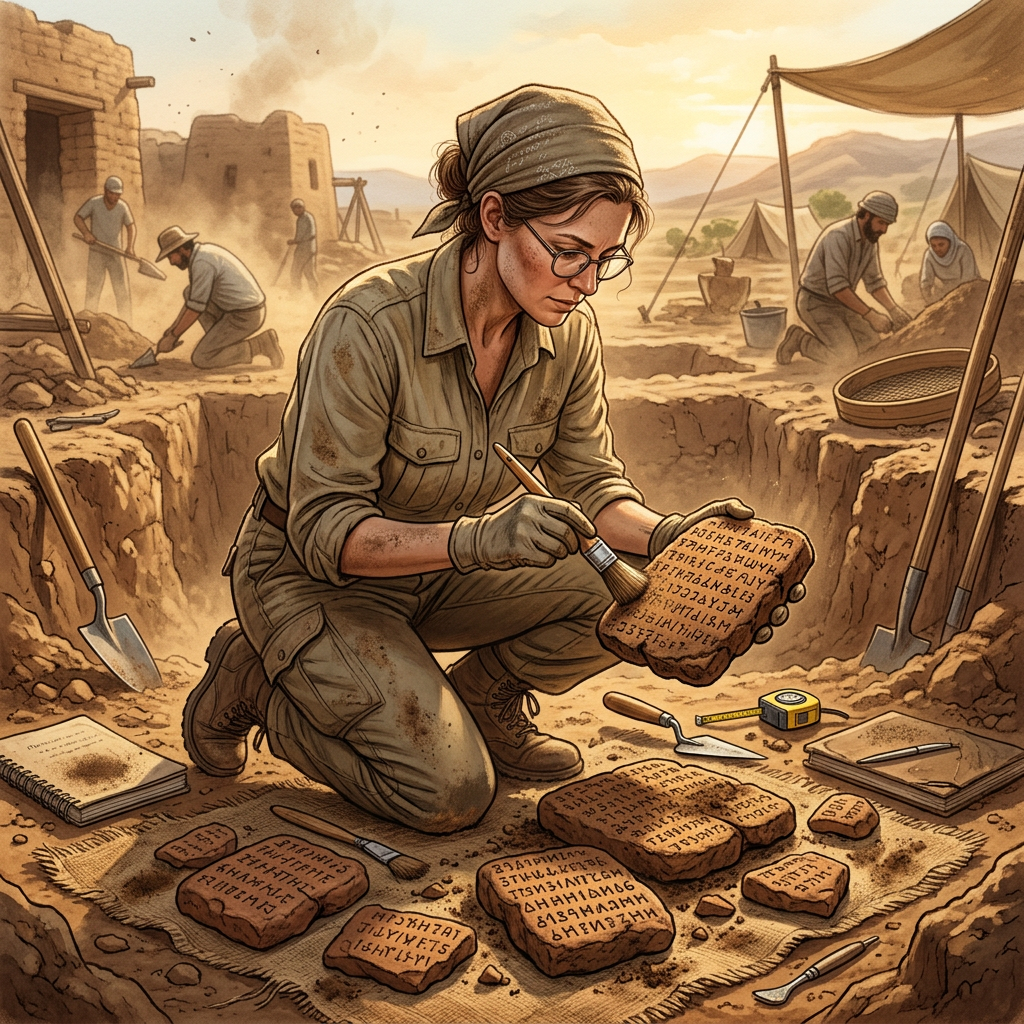
Archaeologists excavating a site in the Ghaggar-Hakra basin have discovered a set of clay tablets dating to the 6th-century BCE, inscribed with the 'Nishpatti-Sutra'. This previously unknown text outlines an early Vedic ethic of 'Nishpatti', or the moral imperative to see every action through to its natural completion, regardless of the perceived fruits of labor.
The findings suggest that the roots of the Nishkama Karma philosophy, later popularized in the Bhagavad Gita, may have had specific regional variations focused on the ritual and social obligation of 'wholeness'. The tablets provide a rare glimpse into the pre-Mauryan ethical landscape of Northern India.