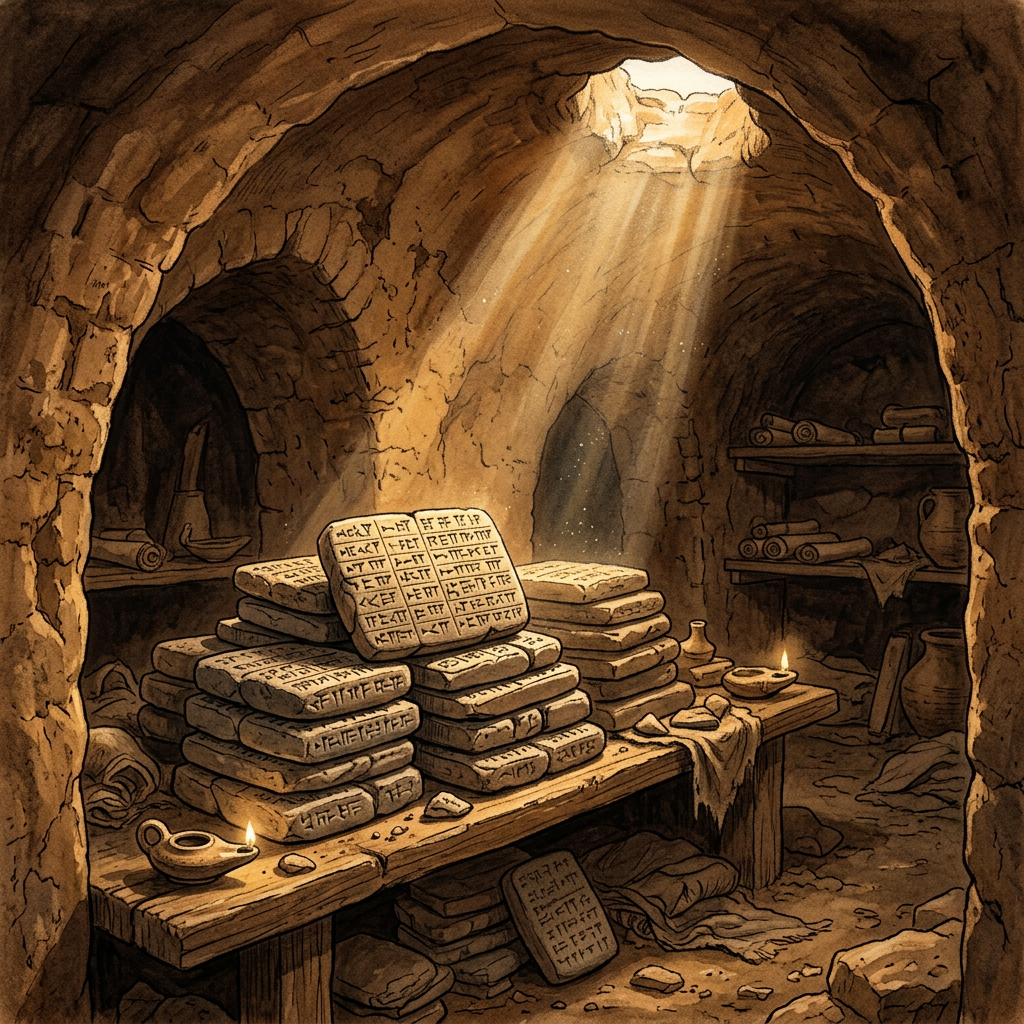
A breakthrough excavation in the administrative quarter of Ancient Larsa has uncovered a cuneiform archive described by researchers as a 'Registry of Royal Seed-Patents.' The 450 clay tablets, dating to the Old Babylonian period, detail the development and controlled distribution of specialized hybrid emmer wheat and drought-resistant barley strains.
The tablets include precise mathematical ratios for seed-to-yield projections and records of 'royal seals' granted to specific agricultural guilds for the exclusive cultivation of high-quality grains. This sophisticated system of intellectual property for botanical assets suggests that the Babylonian state exercised rigorous control over genetic resources to ensure food security and maintain a monopoly on premium exports.