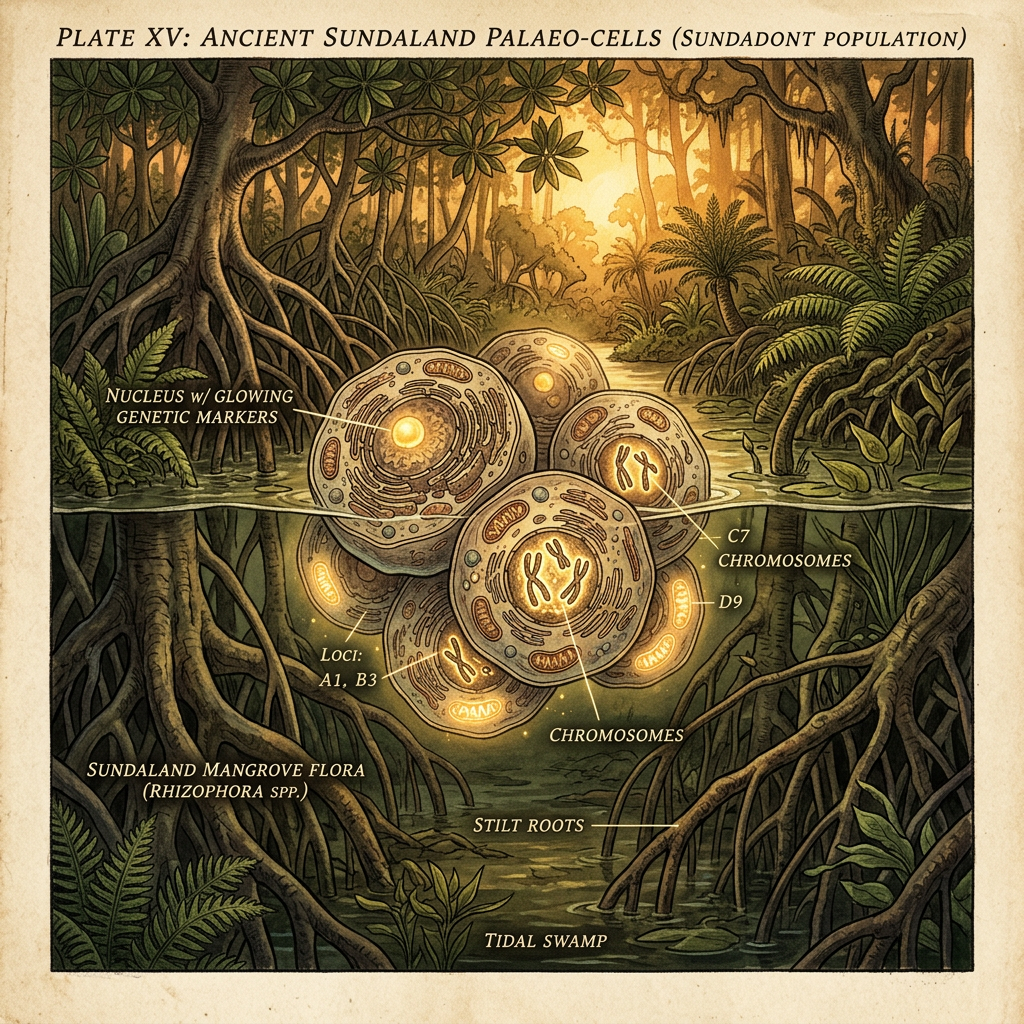
New research appearing in Nature Communications details the genomic sequencing of late Pleistocene remains from the submerged continent of Sundaland. The analysis has uncovered the earliest known genetic signature of adaptation to tropical vector-borne hemorrhagic pathogens, indicating that prehistoric populations in Southeast Asia were evolving complex biological defenses against mosquito-borne diseases nearly 15,000 years ago.
This paleogenomic study offers critical insights into human survival in humid, high-pathogen environments during the transition from the last glacial maximum. The findings suggest that these early maritime foragers possessed unique immune system variants that facilitated their spread through the archipelagos of the Indo-Pacific, long before the arrival of Neolithic farming communities.