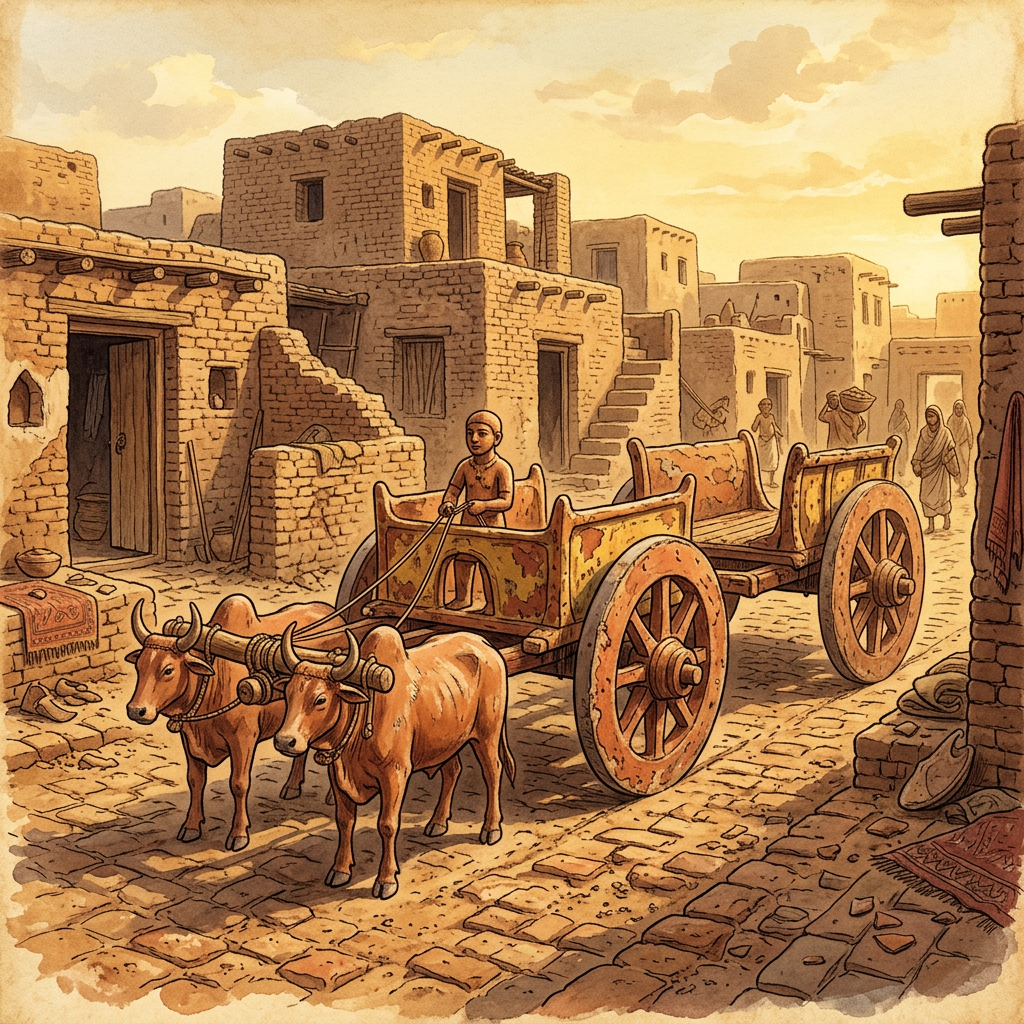
Archaeologists at a newly identified rural settlement of the Indus Valley Civilization in Haryana have discovered a cache of oversized clay chariot models, some measuring nearly a meter in height. Unlike the small toys commonly found at Harappan sites, these models feature removable axles and traces of mineral pigments in bright red and yellow. The chariots were found arranged in a linear formation along a wide, paved thoroughfare, suggesting they were used in ritual street processions.
Scholars believe these artifacts represent the earliest evidence of the "chariot festival" tradition that remains a hallmark of South Asian cultural heritage today. The presence of bovine remains and charred floral garlands near the chariots suggests that the vehicles were likely part of a vernal agricultural festival celebrating the power of the sun and the fertility of the land. This find suggests that the structural elements of modern festivals like the Ratha Yatra have roots extending back over 4,500 years.