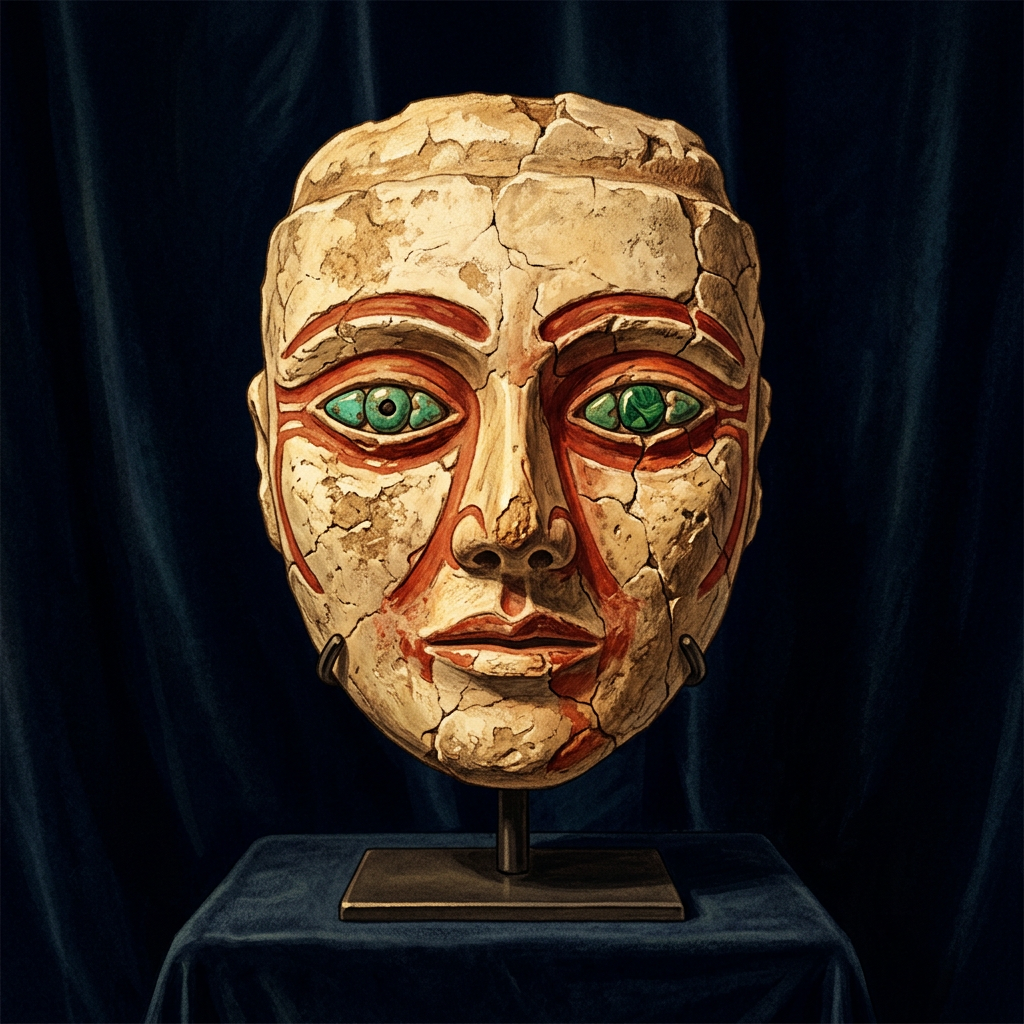
In a groundbreaking discovery near the Sea of Galilee, archaeologists have unearthed a series of Pre-Pottery Neolithic masks made from lime plaster and decorated with vivid green malachite and red ochre. The masks, which were found in a specialized ritual pit, were modeled after the features of ancestors. Chemical analysis of the pigments suggests they were applied during a single event, likely a communal festival coinciding with the spring equinox and the blooming of wild anemones.
The find suggests that the Levant’s earliest farmers engaged in complex, multi-day celebrations designed to ensure the cycle of seasonal rebirth. By wearing the likeness of their ancestors, participants in these ancient festivals likely sought to invoke ancestral protection for the newly planted crops. This discovery provides the oldest known physical evidence for the link between ancestral veneration and the agricultural calendar in the Near East.