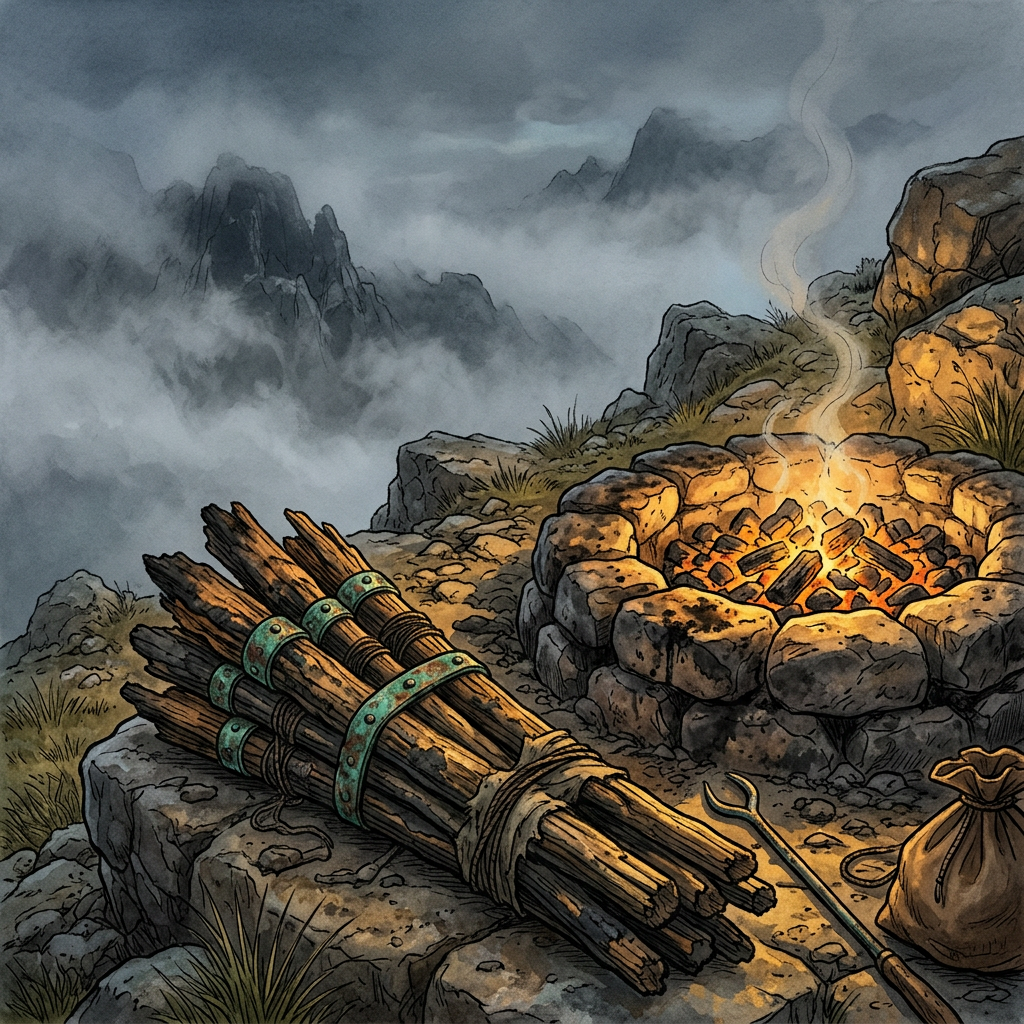
Recent excavations at a Bronze Age hilltop site in Germany's Harz Mountains have uncovered a remarkable cache of preserved pine-resin torches, some reinforced with decorative copper bands. The torches were found in a circular arrangement around a central bonfire pit that showed evidence of repeated use over several centuries. Analysis of the wood and resin suggests the torches were specifically prepared to burn with a bright, aromatic green flame, likely achieved through the addition of copper minerals.
This discovery provides a prehistoric precedent for the region's famous Walpurgis Night and spring fire traditions. The presence of ceremonial bronze sickles and charred grain offerings suggests that these fire festivals were intended to "purify" the mountain pastures before the annual movement of livestock. The find highlights the incredible longevity of European fire-based folklore and its roots in early agricultural management and seasonal transitions.