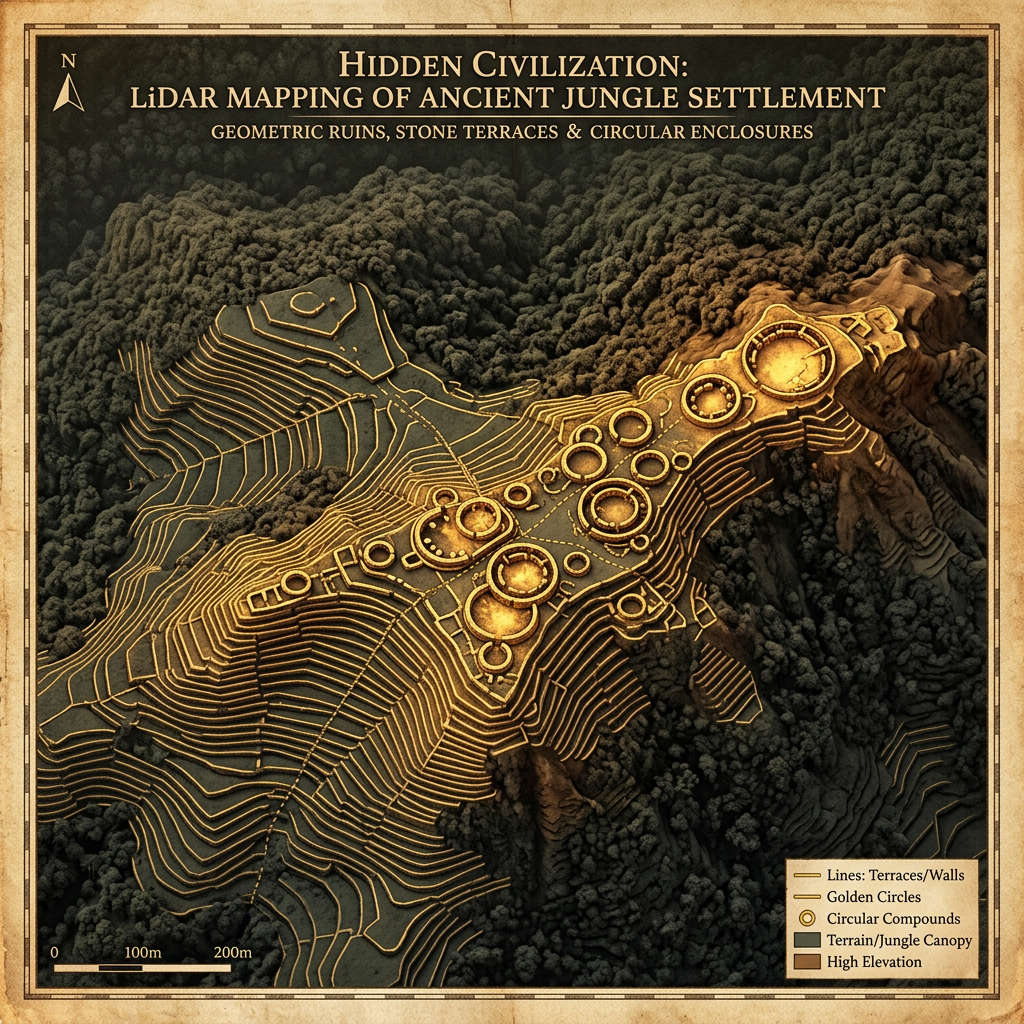
A large-scale LiDAR survey over the dense rainforests of the Mosquitia region in Honduras has identified a previously unknown fortified outpost of the Pech culture. The data reveals a series of concentric stone terraces and defensive walls surrounding a central ceremonial plaza, dating to approximately 800 CE.
This site appears to have functioned as a strategic trade node between the Maya highlands and the Caribbean coast. The LiDAR imagery shows an extensive network of paved causeways and stone-lined water reservoirs, suggesting that the Pech people possessed advanced engineering capabilities and a sophisticated urban infrastructure independent of their Maya neighbors.