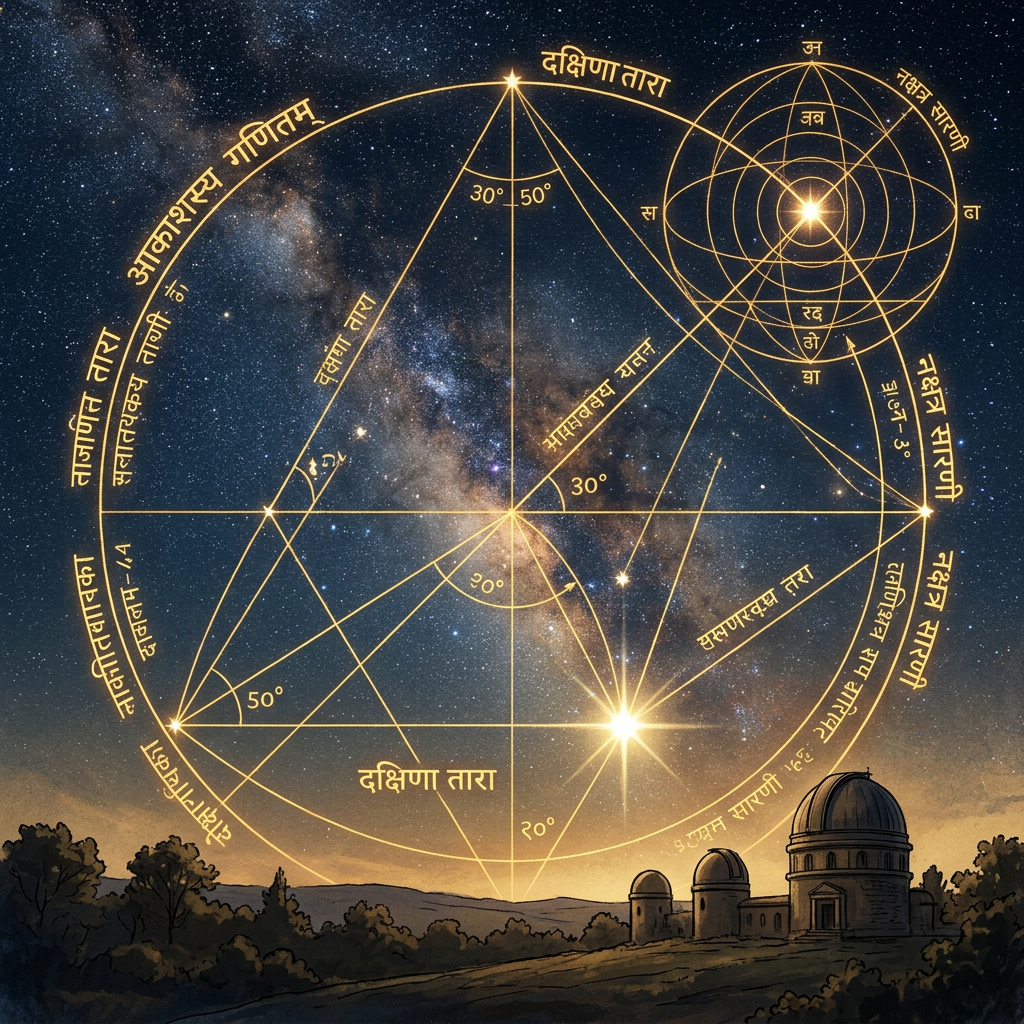
New research published in Ancient Astronomy Quarterly uses computational modeling to analyze celestial descriptions found in the Shankhayana Aranyaka, a Vedic text dating to the early 2nd millennium BCE. The study demonstrates that the authors tracked the movement of the star Canopus (Agastya) with such precision that they were able to quantify the rate of precessional drift relative to the horizon at a latitude of 28° North.
By correlating these ancient observations with high-fidelity astronomical simulations, researchers have confirmed that the data matches the specific celestial configuration of 2100 BCE. This finding suggests that Vedic astronomers possessed a rigorous mathematical framework for long-term observational cycles, allowing them to adjust their ritual calendars to account for the slow shift of the stars over centuries.