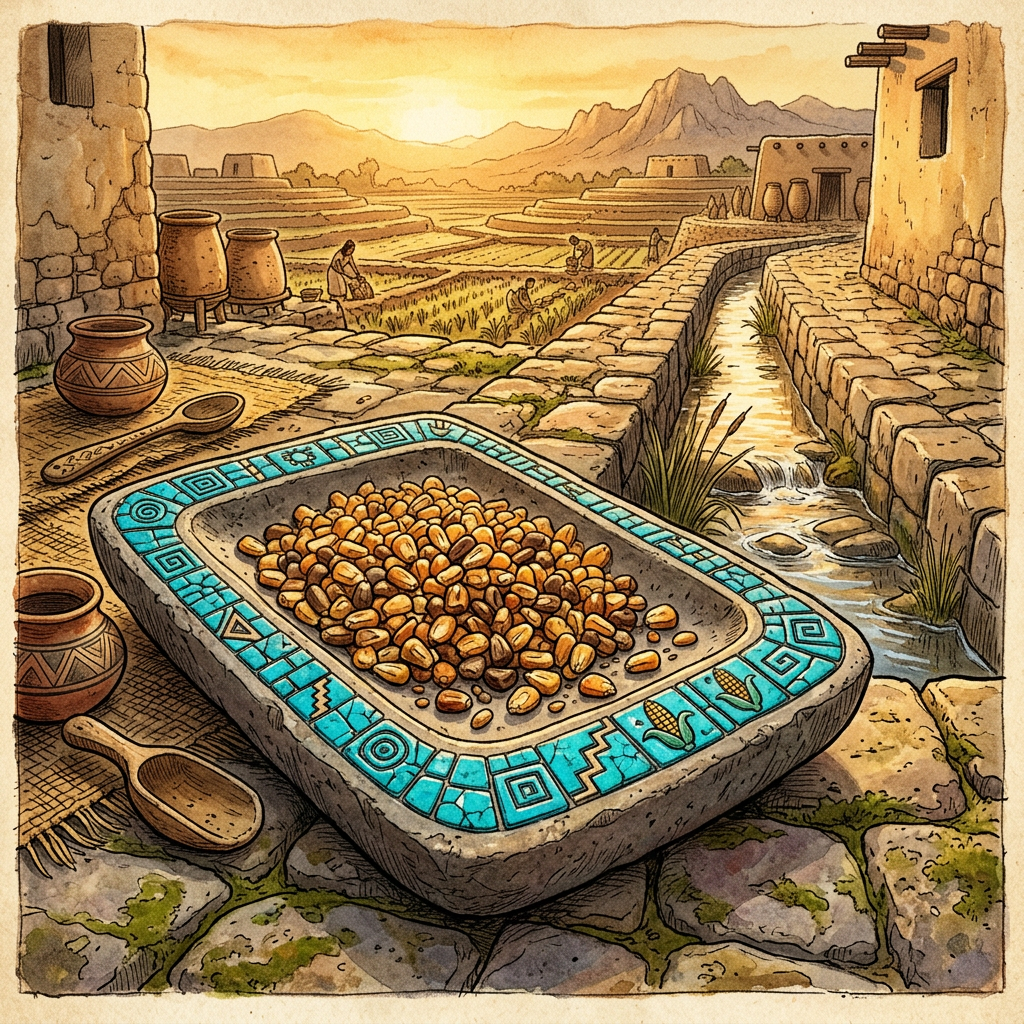
In the arid San Pedro de Atacama region, archaeologists have unearthed turquoise-mosaic seed trays used by the pre-Inca inhabitants for ritual offerings. The trays, found at the head of a complex ancient irrigation canal, were used to hold 'first seeds' during a Festival of the Water-Opener. The turquoise tiles were arranged to depict lightning and rainfall, symbols of fertility in one of the world's driest environments.
The find indicates that the management of water was not just a technical challenge but a deeply religious and festive communal activity. By celebrating the opening of the canals with music and offerings of seeds, the ancient Atacameño people reinforced social bonds and spiritual ties to the land, a tradition that continues in modified forms in modern Andean cleaning-of-the-ditch ceremonies.