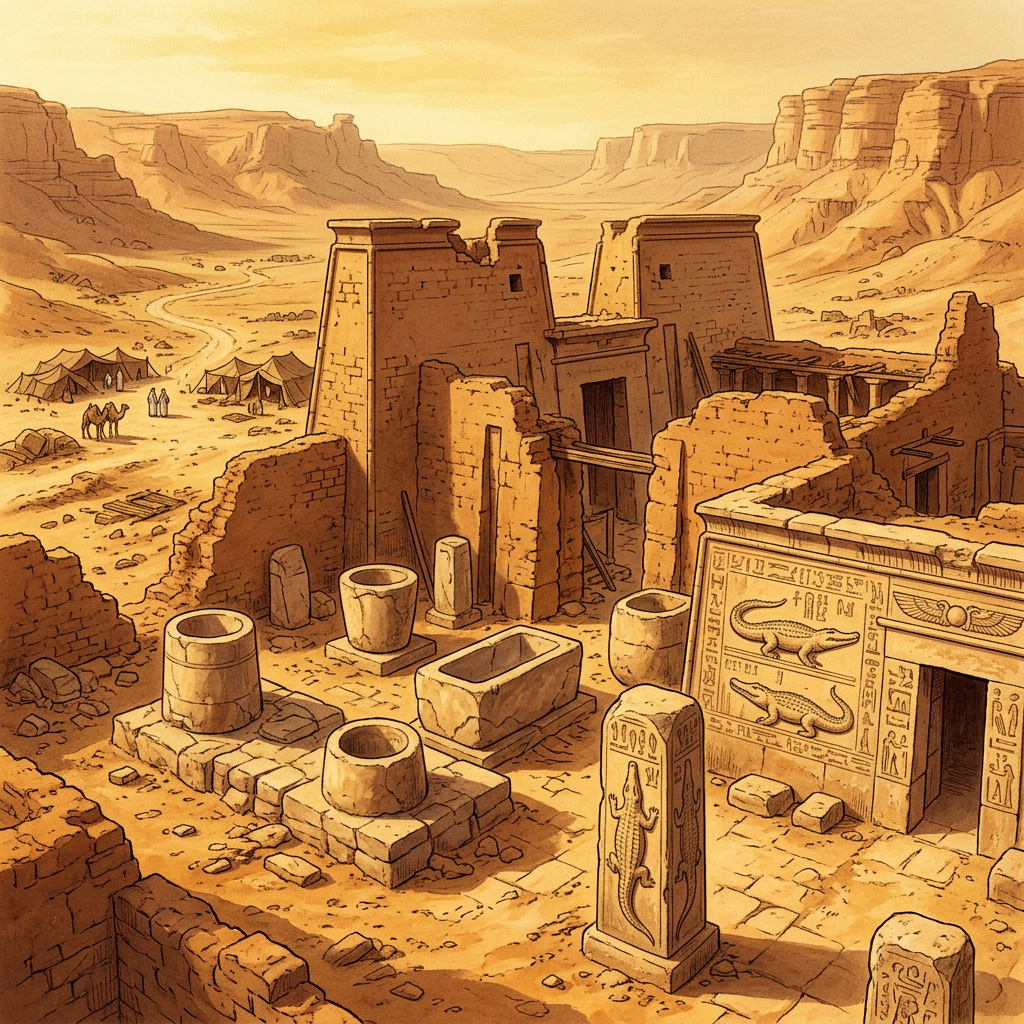
An international team of archaeologists has announced the discovery of a Late Period temple dedicated to the crocodile god Sobek in the Wadi el-Natrun region. The structure, dating back approximately 2,500 years, features unique mud-brick walls reinforced with natron-infused mortar, a material typical of the local desert chemistry. Inside the sanctuary, researchers found a series of limestone vats used for the ritual mummification of juvenile crocodiles, many of which remain remarkably intact.
The excavation revealed several stelae and inscriptions detailing the temple's role as a pilgrimage site for travelers crossing the western desert. Unlike larger temples in the Nile Valley, this desert shrine displays a rare fusion of traditional Egyptian motifs with local nomadic decorative styles. Further analysis of the pottery found at the site indicates that the temple remained an active center of worship well into the early Ptolemaic era.