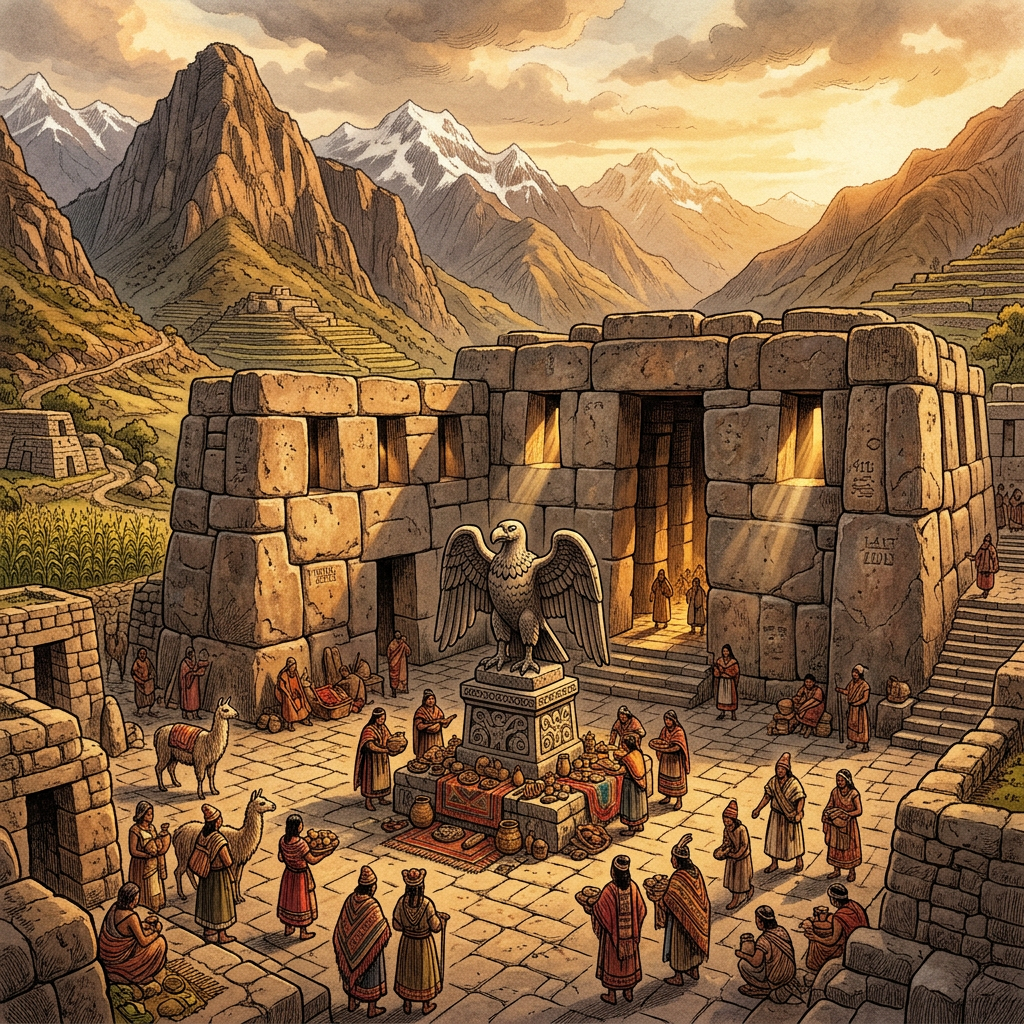
Deep in the Peruvian Andes, researchers have located a ceremonial complex dating to approximately 1200 BCE, dubbed the Temple of the Golden Condor. The site is characterized by massive megalithic blocks and a series of horizontal stone shafts or 'sighting-tubes' built into the main temple walls. These shafts were precisely aligned to track the movement of the constellation Cygnus during the winter solstice, serving as a sophisticated calendar for local agricultural cycles.
Inside the main plaza, a large monolithic sculpture of a condor was found, still bearing traces of gold leaf. The architectural style predates the Chavín culture and suggests that complex religious hierarchies and astronomical knowledge were well-developed in the Upper Marañón region much earlier than previously thought. The presence of seashells and jungle-sourced obsidian indicates that the temple was a major center for trans-Andean trade and ritual exchange.