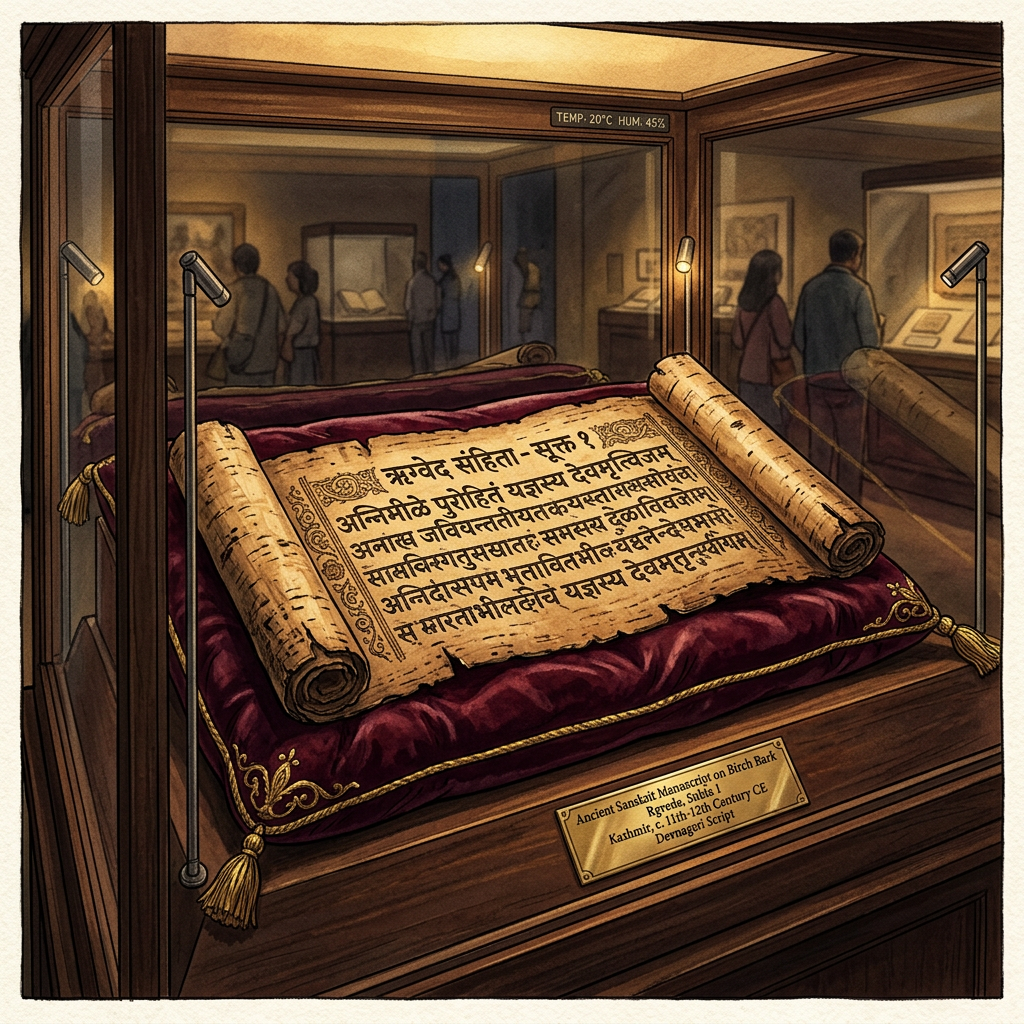
A rare 9th-century Sanskrit manuscript titled 'Tattva-Dipika-Vimarsha' has been discovered in a private family archive in the Malwa region of India. The text appears to be a critical commentary on early Vedantic epistemology, specifically focusing on the nature of cognitive error and the validation of subjective experience. Researchers suggest this finding fills a significant chronological gap in the history of the Indian philosophical tradition, specifically regarding the transition from early Mimamsa logic to the later scholastic era.
The manuscript is written on birch bark and contains extensive marginalia that indicate a vibrant tradition of debate in Central India during the medieval period. This discovery is expected to provide new insights into how ancient Indian thinkers conceptualized the 'illumination of truth' (Tattva-Dipika) and the methodologies they used to deconstruct illusory perceptions in the quest for absolute reality.