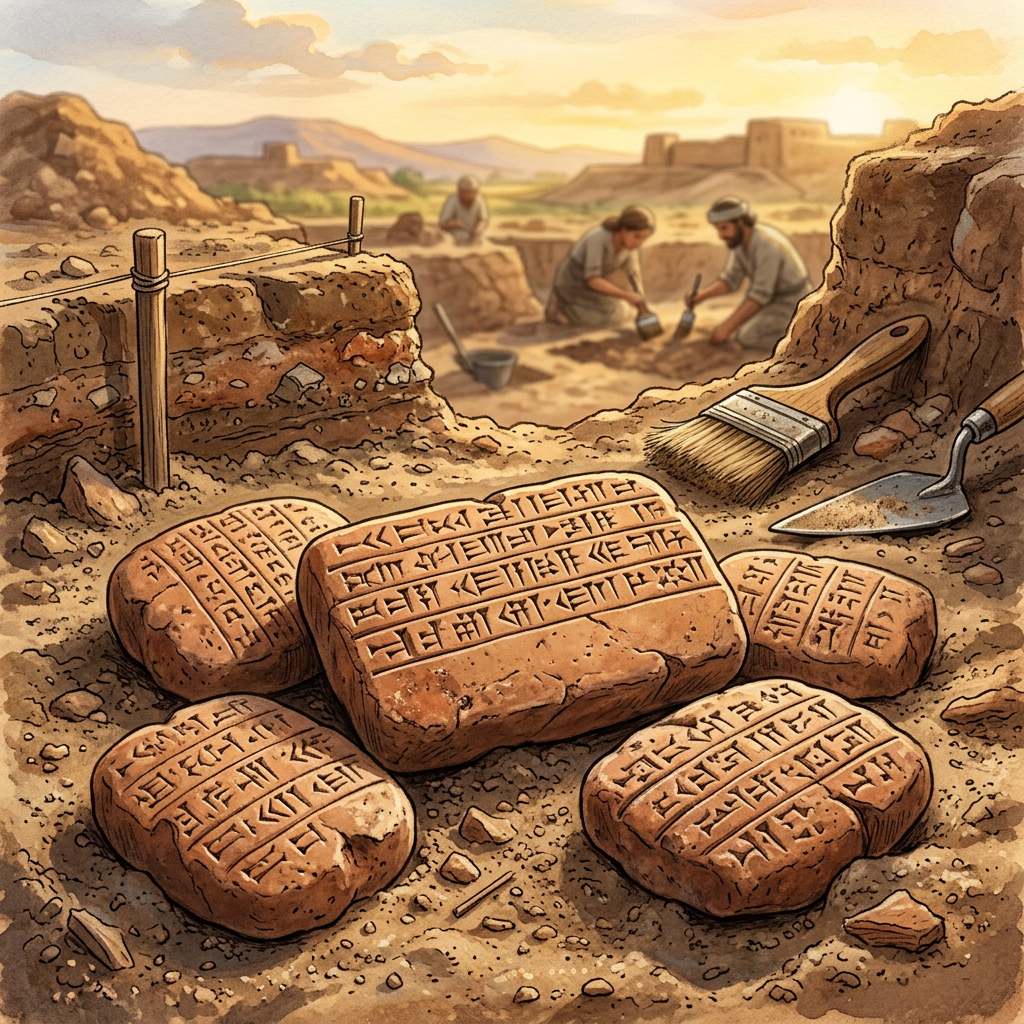
Archaeologists in the Upper Indus Valley have discovered a cache of terracotta tablets inscribed with the 'Karuna-Dharma-Vritti', an early Vedic treatise on the ethics of shared compassion. Dating to approximately 450 BCE, the tablets offer a detailed commentary on how Karuna (compassion) serves as the primary governing principle of social dharma. The text argues that social stability is not maintained by law alone, but by the 'moral resonance' felt between individuals in a community.
This discovery provides crucial evidence for the early development of non-theistic ethical frameworks within ancient Indian philosophy. The tablets were found in what appears to be a local assembly hall, suggesting that these philosophical principles were taught to the public as part of a civic education system. The find significantly enhances our understanding of the social application of Vedic wisdom traditions.