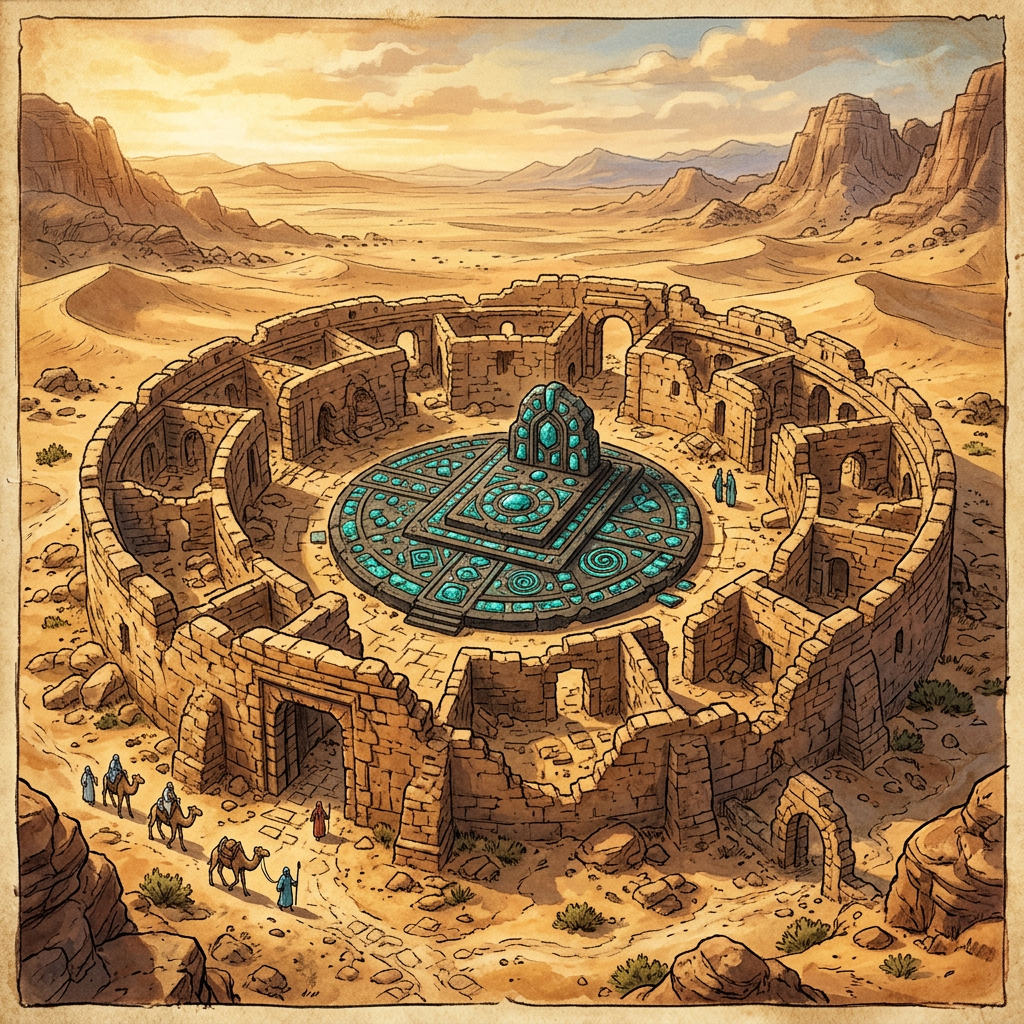
Researchers working in the southern Gobi Desert have identified three massive, circular stone structures paved with raw turquoise and malachite fragments. Dating back approximately 2,000 years, these sites are believed to be the earliest known permanent staging grounds for the ancestral summer festivals of the Xiongnu nomadic confederation.
Unlike typical burial sites, these enclosures lack human remains but are filled with animal bones and fragmented ritual pottery, suggesting a space for large-scale communal feasting. The presence of the turquoise pavement indicates a high level of social organization and a shared cultural focus on the sky and water, mirroring the values still present in traditional Mongolian Naadam festivals today.