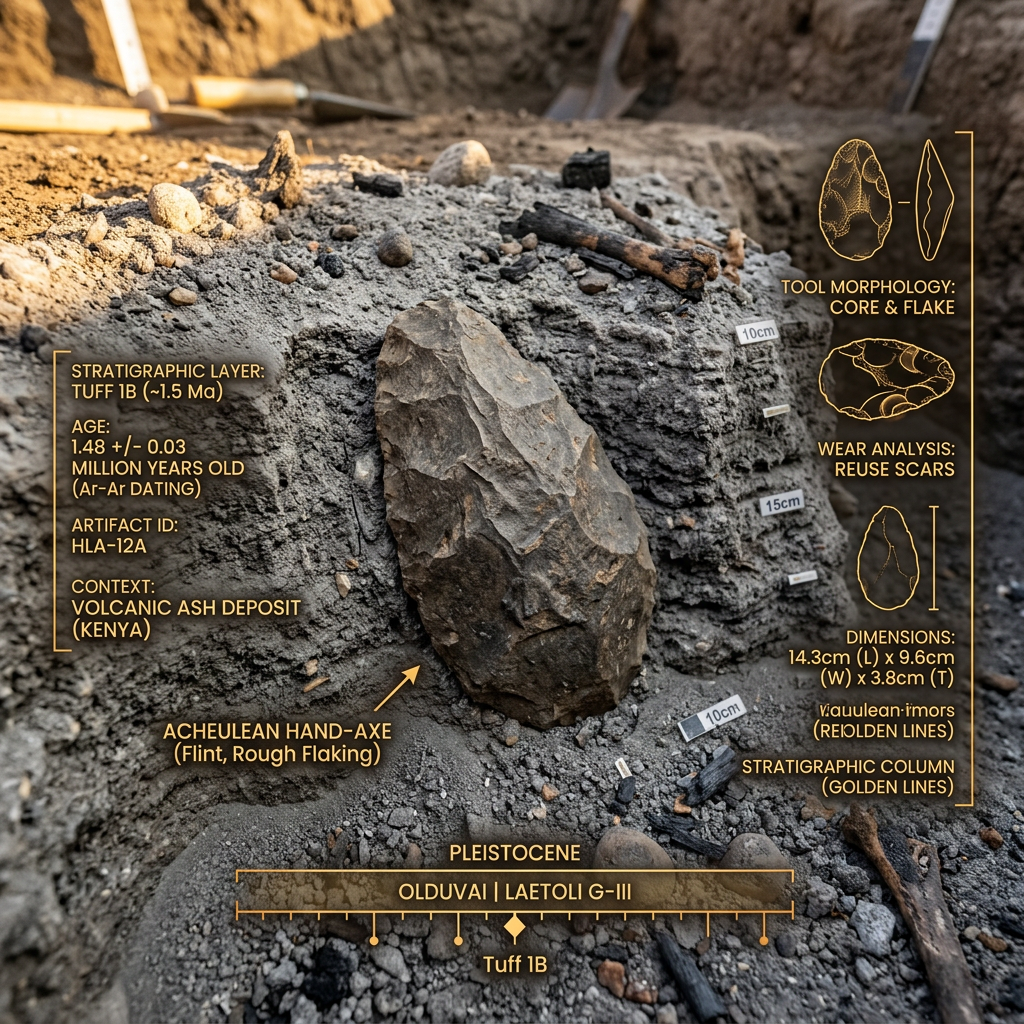
A new study in Archaeological Science Reports has introduced a refined dating methodology using the Samarium-146/Neodymium-142 isotopic system. This technique, which measures the decay of rare earth elements within volcanic ash layers, has been applied to the Melka Kunture site in the Ethiopian Rift Valley. The results have pushed the chronology of the earliest Acheulean stone toolkits found at the site to a precise 1.83 million years ago, with a margin of error of only 5,000 years.
This sub-decadal precision allows researchers to correlate the development of advanced tool-making with specific pulses of climatic change in the region. The study concludes that the transition from Oldowan to Acheulean technology was not a gradual shift but a rapid innovation triggered by a significant aridification event that forced early hominins to adapt to more diverse foraging strategies in open savanna environments.