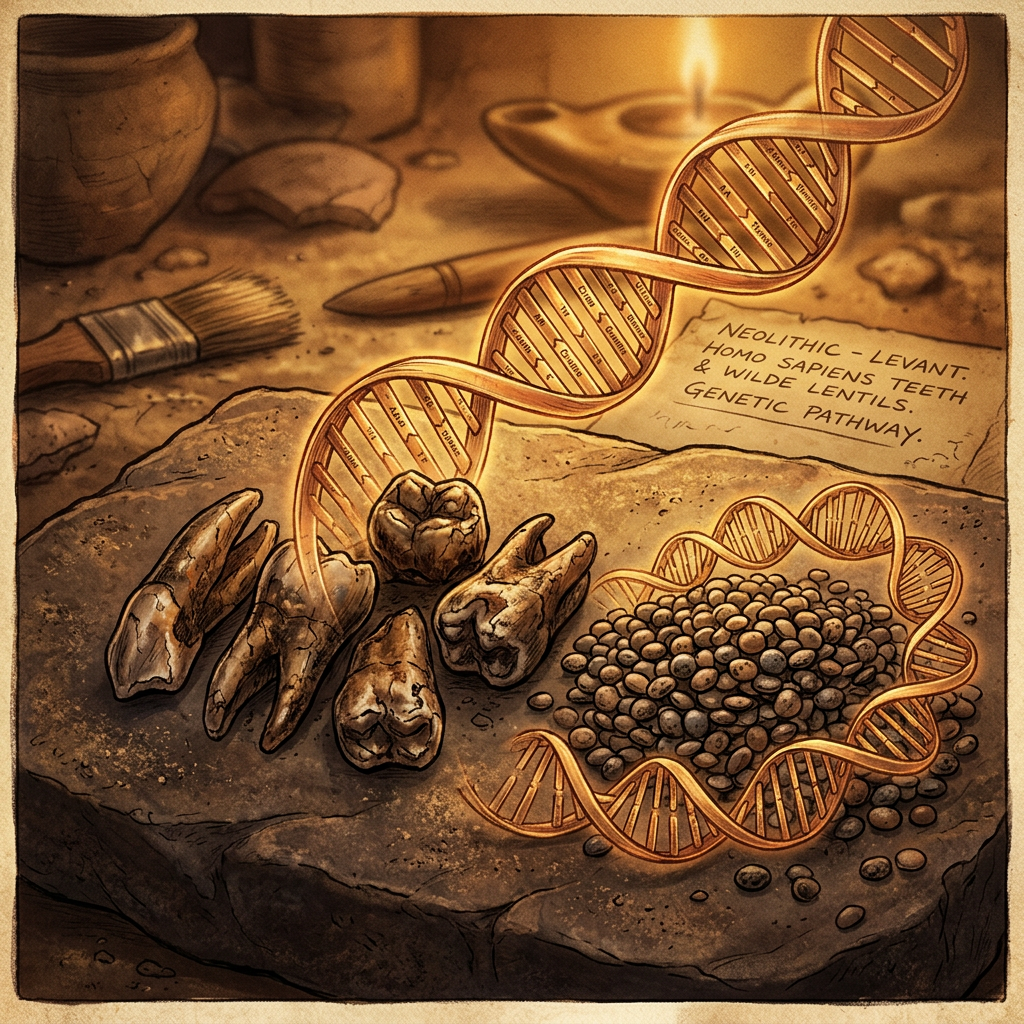
Research published in Paleogenetics Today has revealed the earliest known genetic adaptation to a specialized agricultural precursor diet. By analyzing the teeth of 13,500-year-old hunter-gatherers from the Epipaleolithic Levant, scientists identified a specific duplication in the GDA gene. This duplication facilitates the metabolism of guanine, a byproduct of nitrogen-rich legume consumption, suggesting that these populations were consuming large quantities of wild lentils and peas long before formal domestication.
The study argues that this genetic shift was a prerequisite for the Neolithic Revolution. By adapting to a diet heavy in wild legumes, these early humans were able to sustain larger sedentary populations, which eventually led to the intentional cultivation of these crops. This findings provides a new genomic marker for tracing the transition from nomadic foraging to the first settled farming communities in the Fertile Crescent.