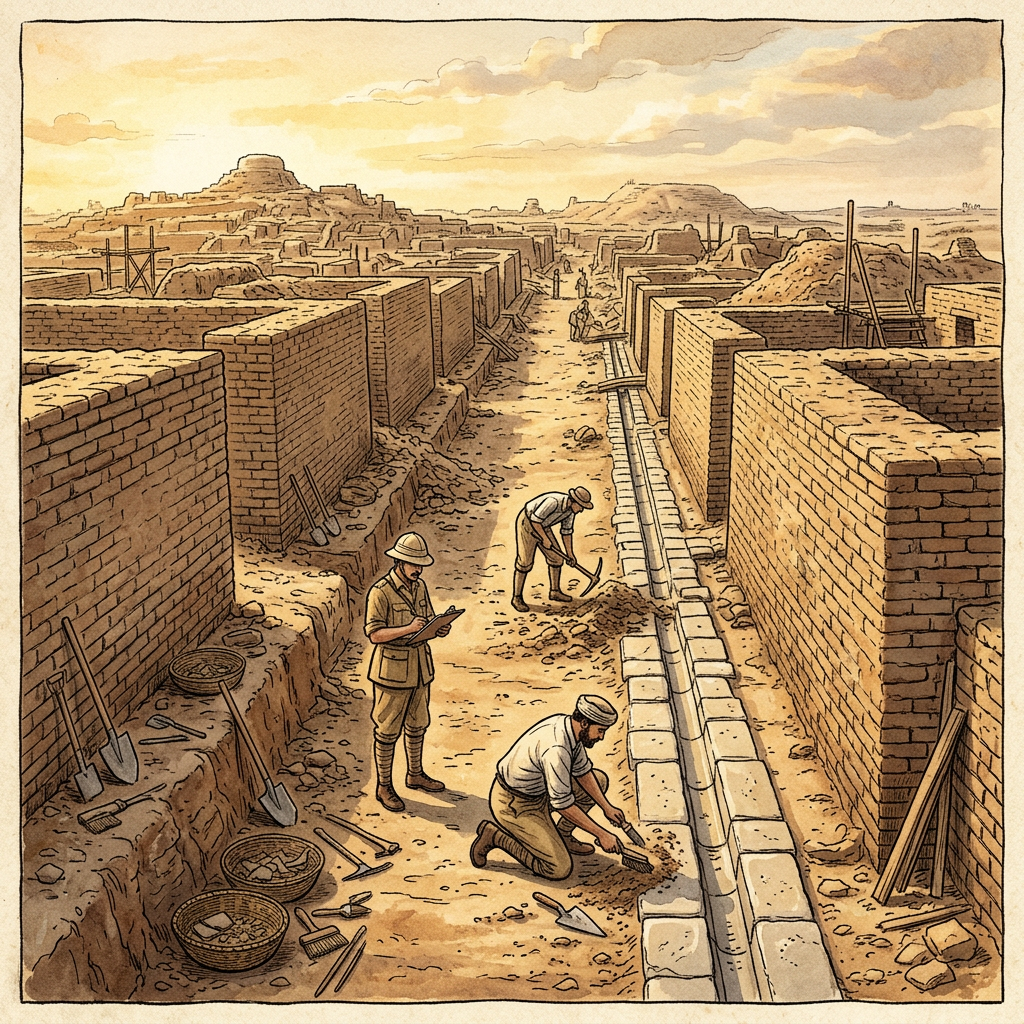
Archaeologists working at the UNESCO World Heritage site of Mohenjo-Daro have completed the excavation of a new residential sector that offers a detailed look at the lives of ordinary citizens. Unlike the grand palaces previously studied, this quarter consists of smaller, standardized two-story brick houses, each equipped with its own private bathing room and a direct connection to the city's main sewer line.
The findings reinforce the theory that the Indus Valley Civilization maintained an unprecedented level of urban equality and public health. Artifacts recovered from the homes include terracotta spindle whorls, copper sewing needles, and a variety of standardized stone weights, indicating that these residents were likely engaged in the textile trade. The discovery of a communal well within the block suggests a neighborhood-based management of essential resources.