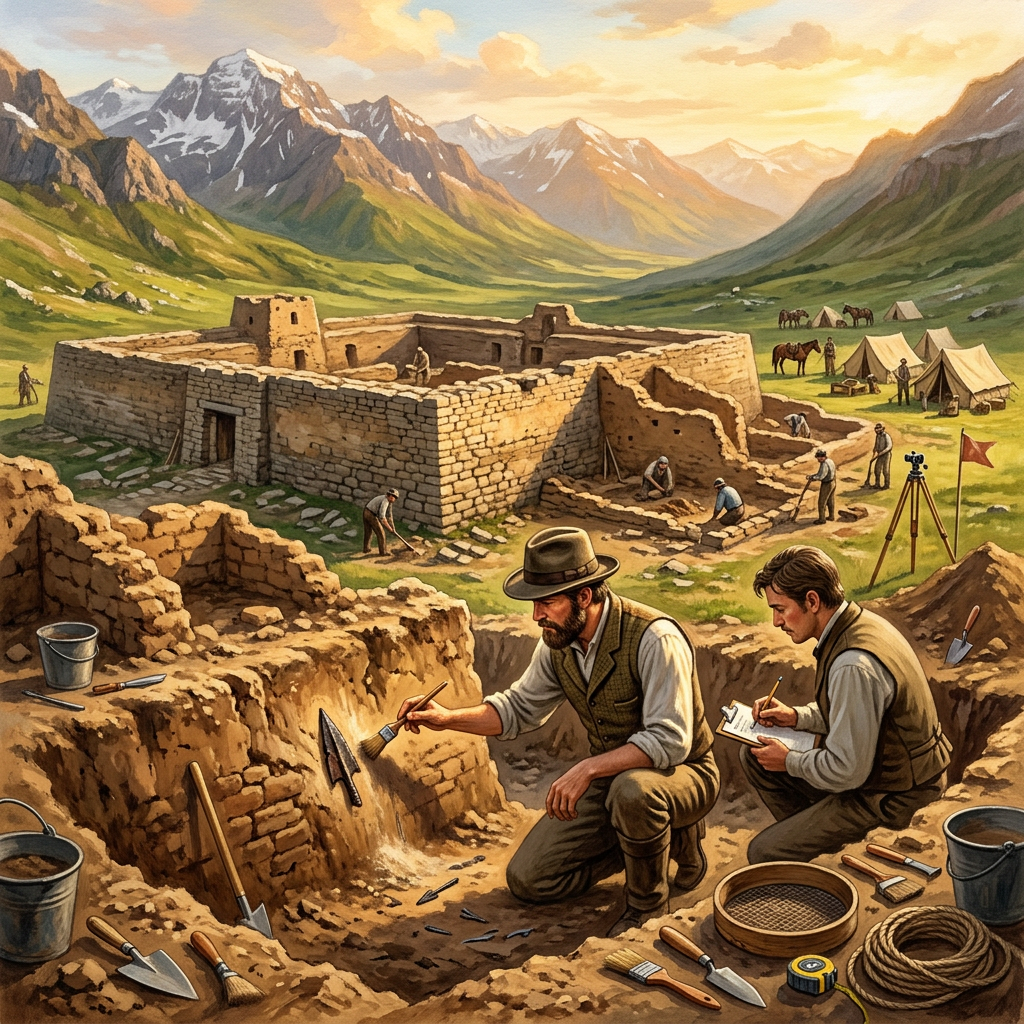
Archaeologists working in the Caucasus foothills of Azerbaijan have unearthed an exceptionally well-preserved Achaemenid Persian military outpost dating back to the 5th century BCE. The site includes a fortified central building with massive stone foundations and mud-brick walls, suggesting a strategic vantage point designed to monitor nomadic movements along the empire's northern frontier during the reign of Darius the Great.
The excavation revealed a rare cache of iron arrowheads, bronze belt buckles, and administrative cylinder seals, indicating the outpost's dual role as a military garrison and a regional tax collection point. Researchers believe this discovery provides crucial evidence of the Persian Empire's sophisticated logistics and its ability to consolidate power in remote mountainous regions through a network of highly organized frontier stations.