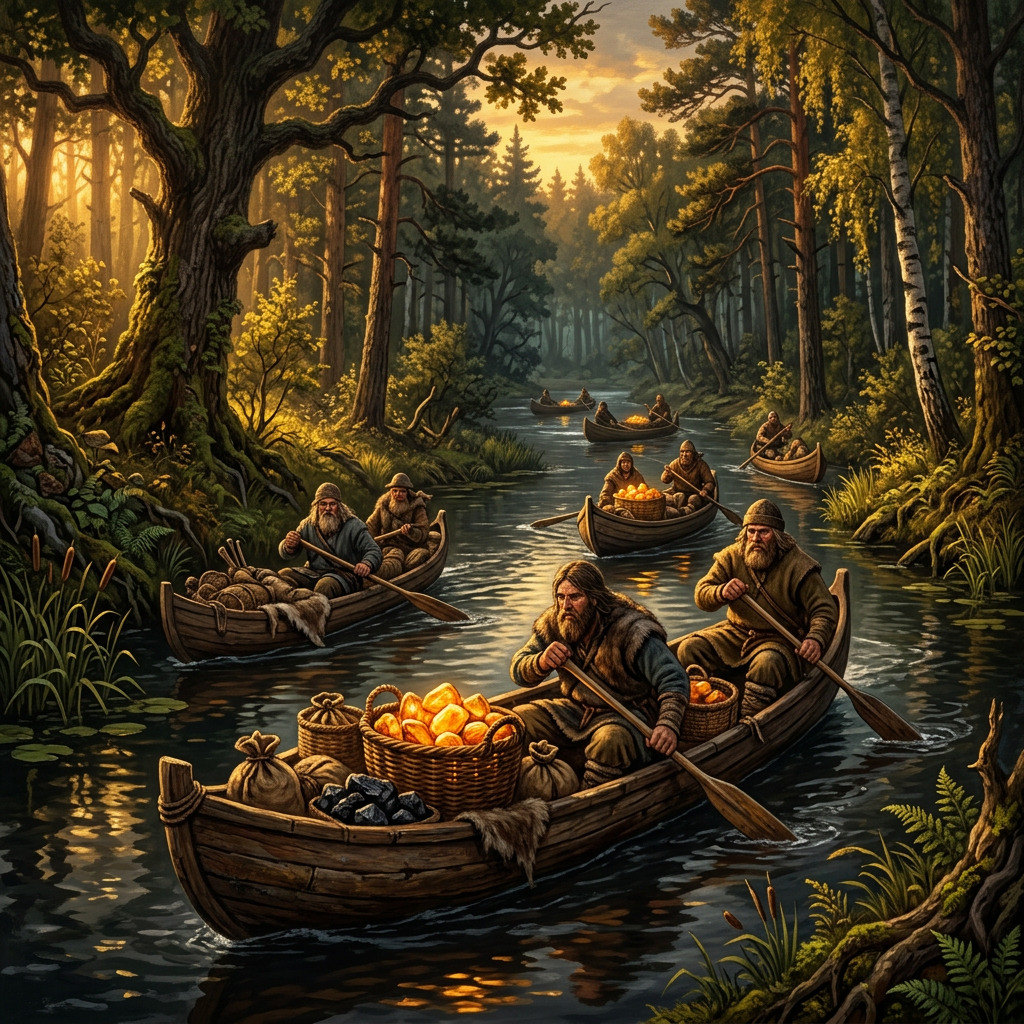
Archaeologists at Warsaw University have published a groundbreaking study identifying the 'Lignite and Amber' Route, a prehistoric trade corridor connecting the Baltic coast to the northern Black Sea region. By using strontium isotope analysis on skeletal remains found in riverine settlements, the team proved that raw amber was exchanged for fossilized lignite and copper tools as early as 2500 BCE.
This discovery challenges the traditional view that major trans-European trade was solely a phenomenon of the later Bronze Age. The research suggests that the Vistula and Dniester river systems acted as the primary arteries for this exchange, facilitating not only goods but also the spread of early corded ware pottery styles and innovative metallurgical techniques across the European continent.