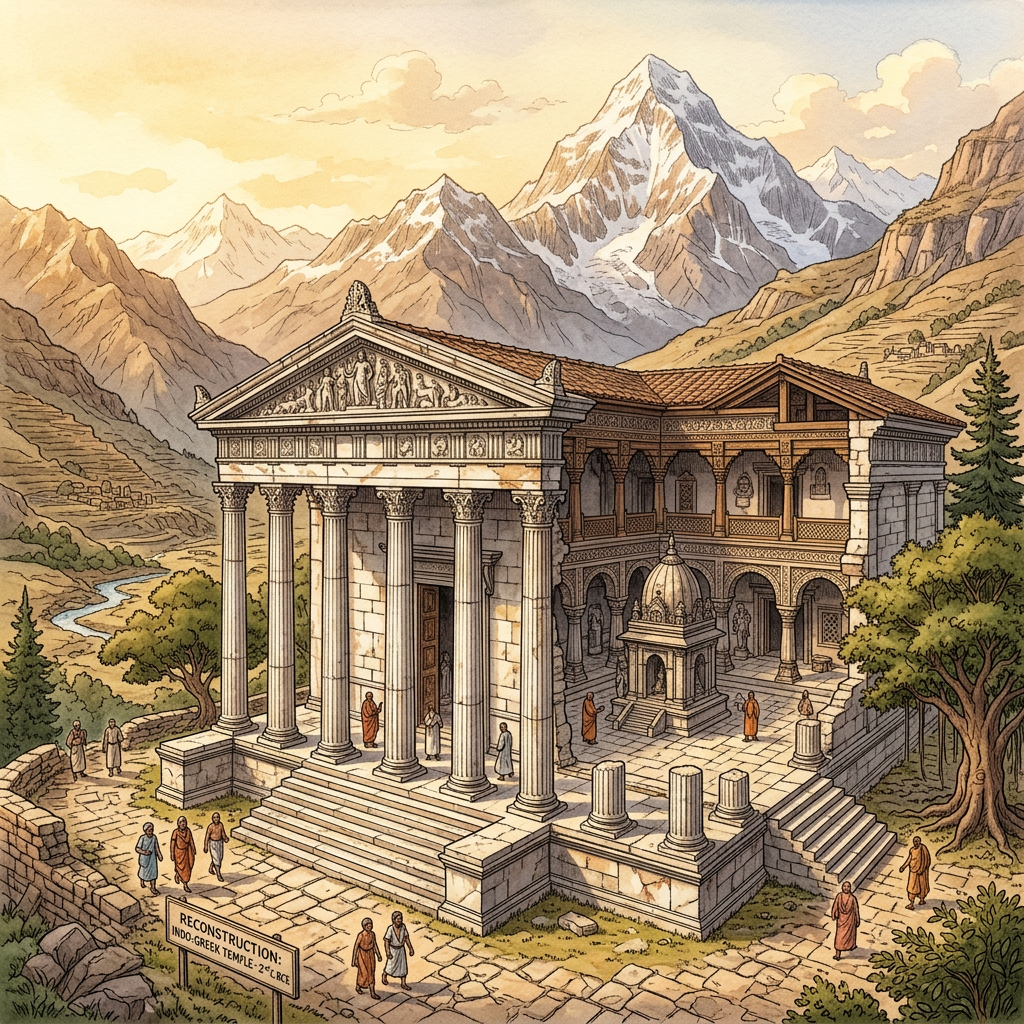
Excavations in the Odigram region of Swat have fully revealed the layout of an Indo-Greek temple dedicated to a syncretic deity. The structure features a classical Greek portico with Corinthian columns but houses a sanctum containing an altar shaped like a traditional Indian fire-shrine. This architectural hybridity provides concrete evidence of the deep cultural synthesis that occurred under kings like Menander I.
Found within the temple debris were several silver coins and a rare Gandharan-style frieze depicting Dionysian revelry occurring alongside Buddhist processions. Scholars suggest that this temple served as a communal worship space for the diverse population of the Indo-Greek kingdom, where Mediterranean architectural forms were seamlessly adapted to serve South Asian ritualistic needs.