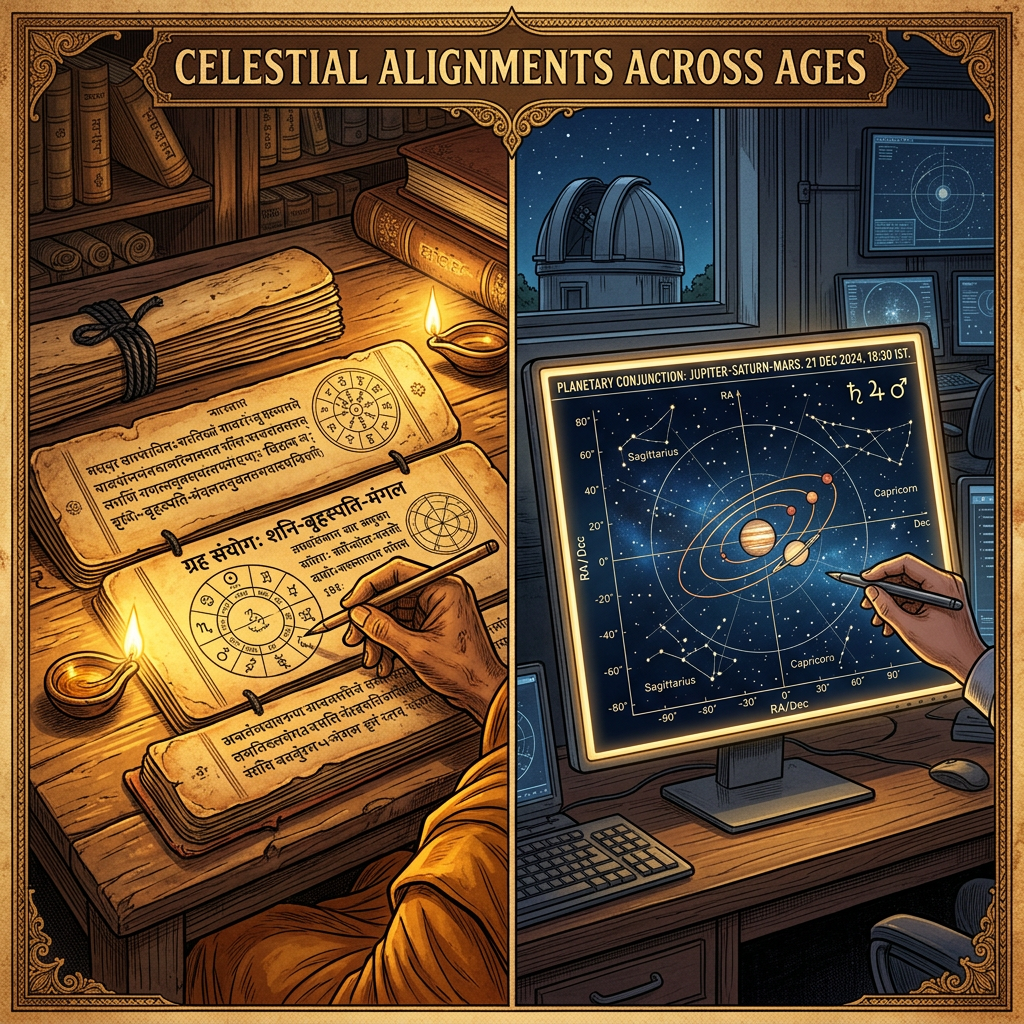
Astronomers and Sanskrit scholars have collaborated on a new computational study published in The Journal of Vedic Studies, identifying a specific astronomical reference in the Shukla Yajurveda. The research utilizes high-precision retrograde simulations to demonstrate that certain ritual hymns correlate perfectly with the Great Conjunction of Mars and Jupiter that occurred in the constellation of Magha during the summer of 1750 BCE. This observation provides a firm anchor for dating the late Vedic period's astronomical proficiency.
The paper argues that the descriptions of 'celestial chariots' and specific elemental interactions in the text are not merely mythological but are technical records of planetary occultations and atmospheric luminosity changes. By using Bayesian statistical modeling, the team demonstrated that the probability of these descriptions matching the 1750 BCE event by chance is less than one in ten thousand. This research reinforces the argument that ancient Indian astronomers maintained a rigorous observational record over centuries.