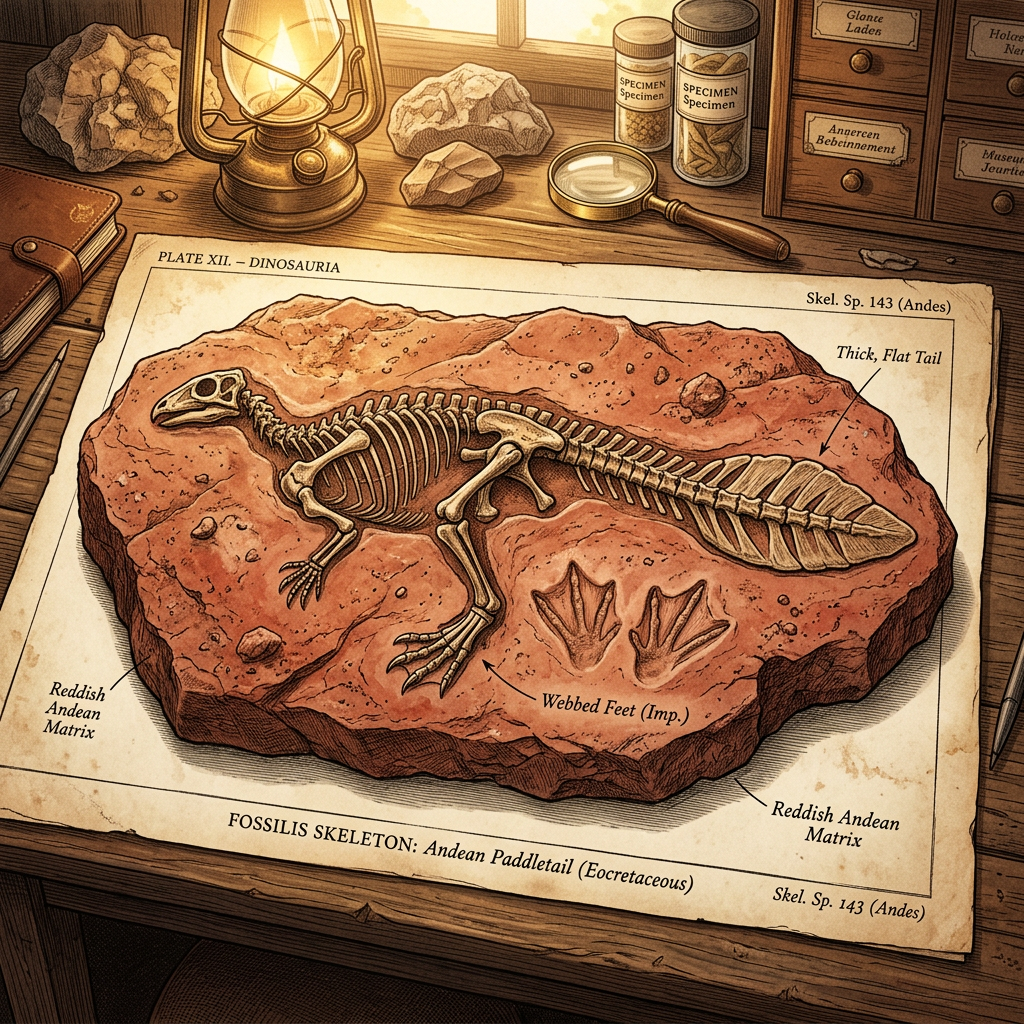
Paleontologists working in the high-altitude deserts of the Chilean Andes have identified the fossilized remains of a 110-million-year-old semi-aquatic dinosaur species. Named Andesaurus natans, the creature features a broad, paddle-like tail and dense bone structure similar to modern hippopotamuses, indicating it spent most of its life in the vast river systems that once crossed South America.
This discovery provides crucial evidence for how some dinosaur lineages adapted to aquatic environments to exploit new food sources. The fossil was found in a remarkably intact state, including impressions of webbed feet, which suggests that the transition to water-based lifestyles occurred multiple times across different dinosaur families during the Cretaceous period.