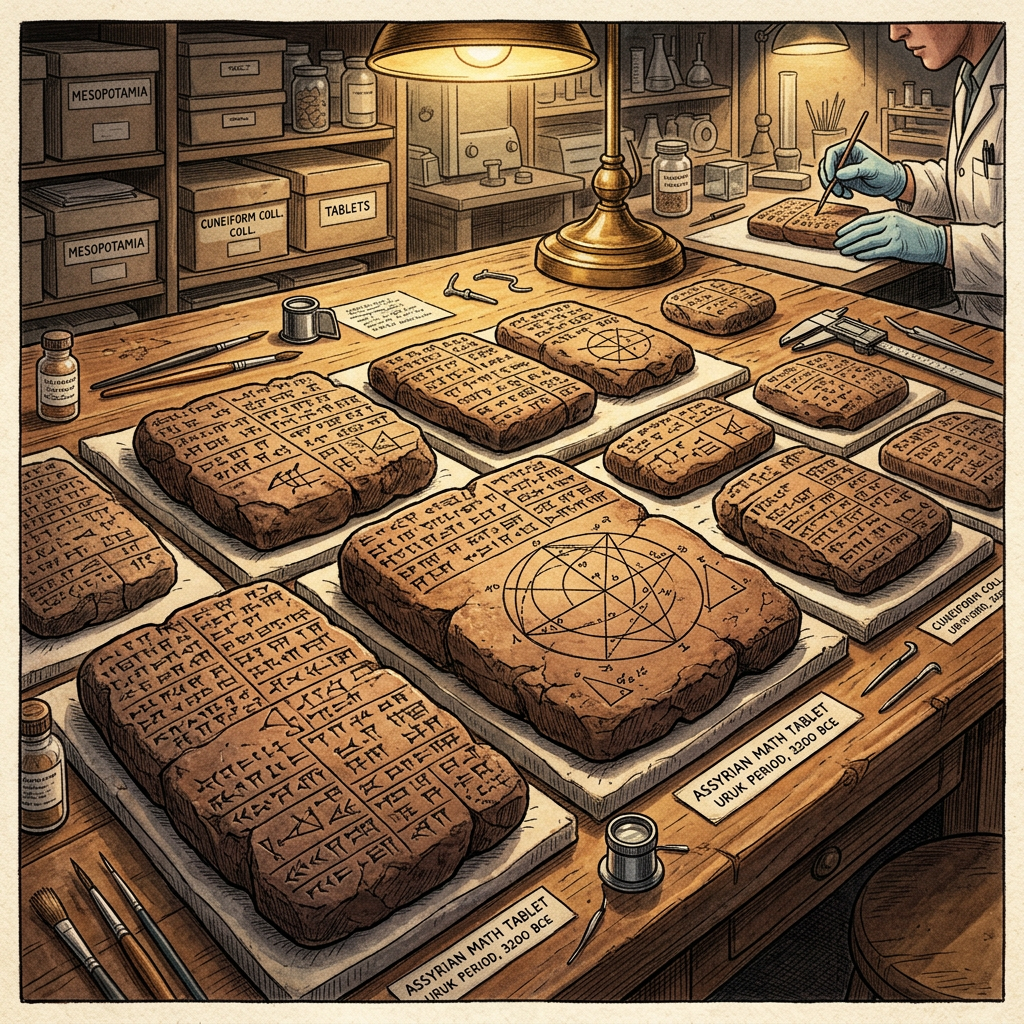
Excavations in the southern residential sector of the ancient city of Ur have brought to light a unique cuneiform archive belonging to a high-ranking bureaucrat in charge of brick production and architectural standardization. The Neo-Sumerian tablets detail the exact proportions for different classes of sun-dried and fired bricks, alongside geometric blueprints for the reinforcement of temple foundations against seasonal flooding.
The archive reveals that the "Master of the Royal Brick-Molds" was responsible for a sophisticated quality-control system, where each batch of bricks was stamped with a date and a specific mineral signature to trace the clay source. This administrative find underscores the mathematical precision used by Sumerian architects to maintain the structural integrity of massive ziggurats and public buildings across Mesopotamia.