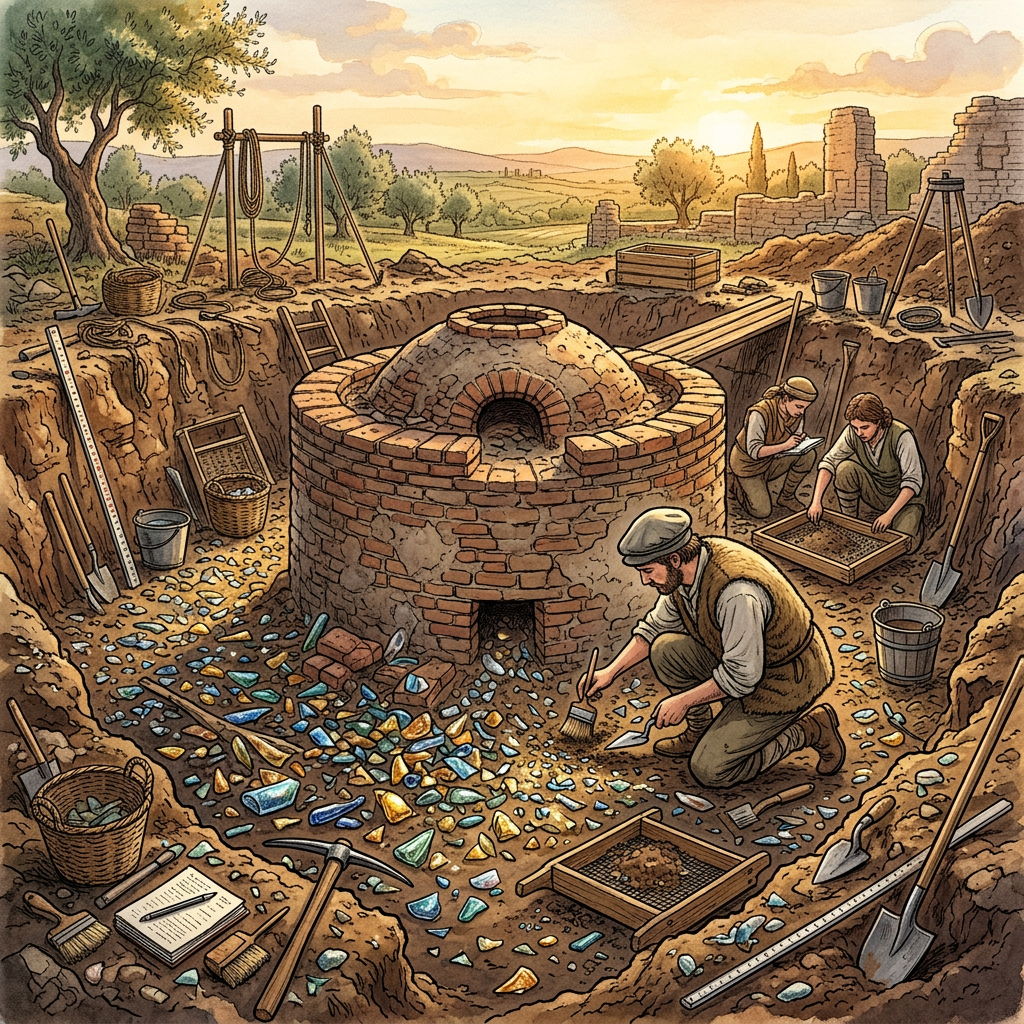
Excavations in the historic Roman city of Aquileia have brought to light an exceptionally preserved artisan glass-blowing workshop dating to the mid-2nd century CE. The discovery is highlighted by a cache of dichroic glass vases—rare artifacts that change color depending on the lighting. This confirms that Roman glassmakers in Italy had mastered the technique of adding gold and silver nanoparticles to glass centuries earlier than previously believed.
The studio remains include three high-temperature circular kilns, specialized iron blowing rods, and over 500 kilograms of raw glass cullet in various hues of cobalt blue and emerald green. Archaeologists also found a 'pattern book' consisting of etched slate tablets showing various vessel designs, providing a unique look into the industrial design processes of the Roman Empire's elite craft guilds.