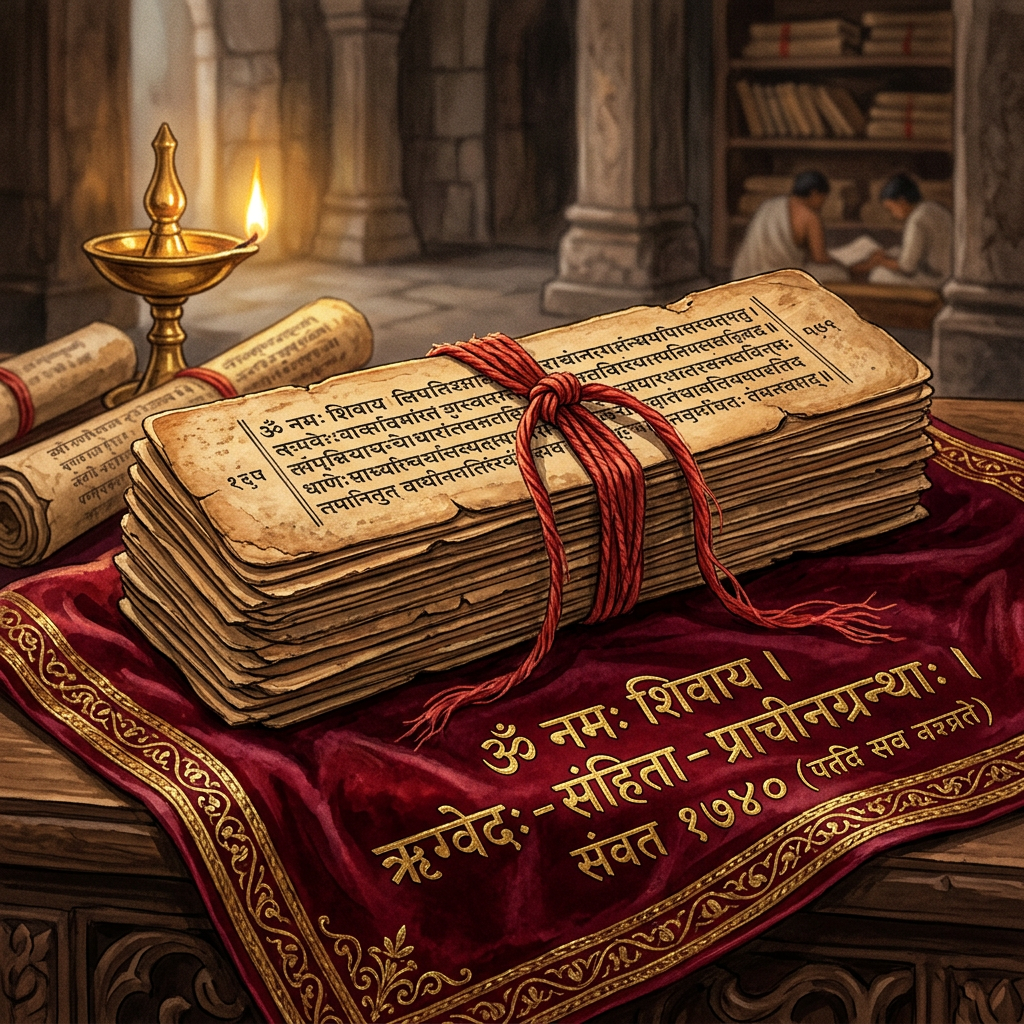
In a private archive in the Mewar region of Rajasthan, researchers have recovered a remarkably preserved 12th-century palm-leaf manuscript titled 'Drishti-Viveka'. The text provides a rigorous logical framework for multi-perspectivalism, or the idea that reality can be validly perceived through multiple, seemingly contradictory viewpoints. While similar to later Jain theories, this manuscript originates from a distinct Vedic lineage of logic previously thought to be extinct.
The Drishti-Viveka introduces the 'Philosophy of the Prism,' suggesting that human cognition naturally refracts absolute truth into various relative truths. Scholars at Banaras Hindu University argue that this text fills a critical gap in the history of medieval Indian dialectics, showing that the pluralistic nature of Indian thought was even more diverse and formalised than previously recorded.