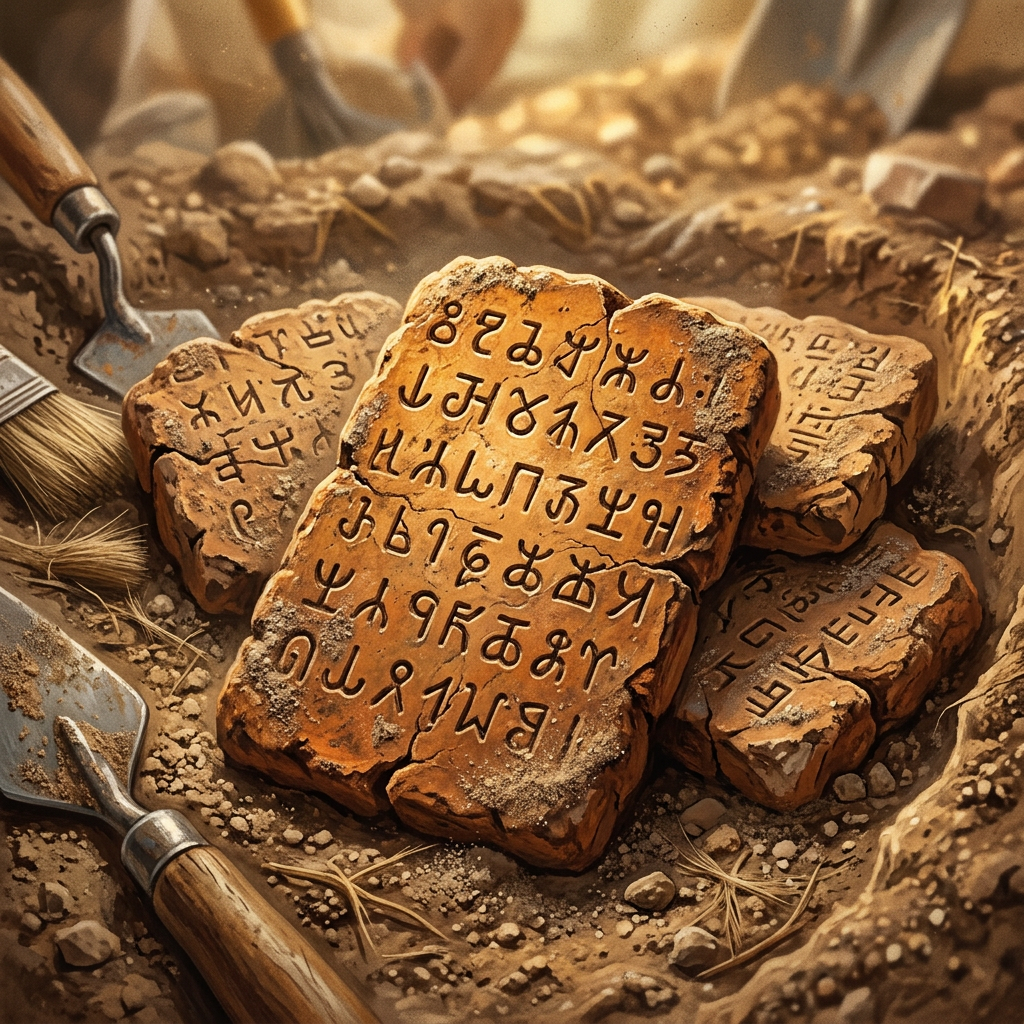
A recent dig near the ancient site of Vaishali in Bihar has yielded a cache of terracotta tablets dating back to the 6th century BCE. The tablets contain aphorisms from a lost work called the 'Bhuta-Siddhanta', which details an early natural philosophy regarding the composition of the material world. Unlike later Vaisheshika atomism, these tablets argue for a 'Philosophy of Elemental Symbiosis,' where the five great elements are viewed as mutually creating one another.
This discovery is significant as it provides a proto-scientific context for early Vedic metaphysics, suggesting that ancient Indian thinkers were developing complex theories of physical reality concurrently with the earliest Pre-Socratic philosophers in Greece. The tablets also mention the ethical responsibility of humans to maintain the 'atomic integrity' of the environment, a surprisingly modern environmental sentiment.