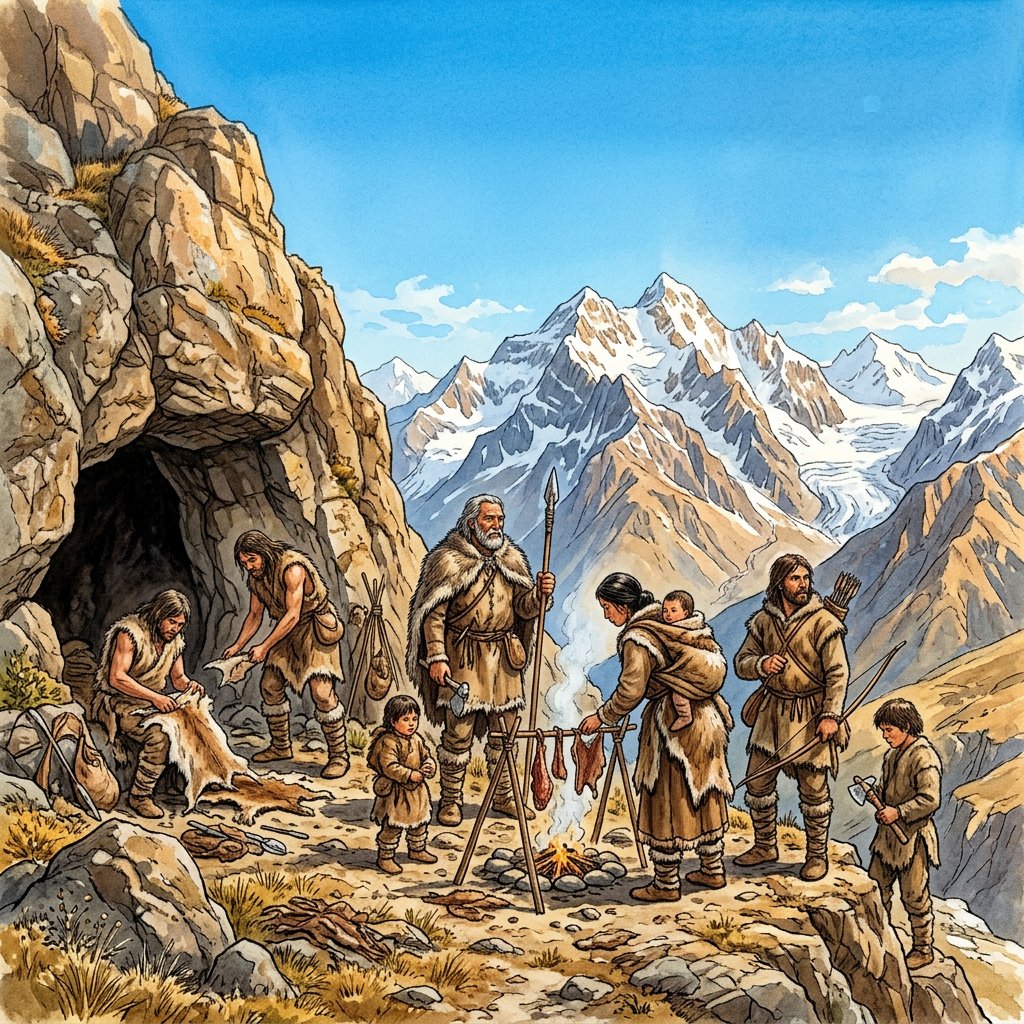
A breakthrough paleogenomic study published in Nature Genetics has identified the earliest known genetic signature for high-altitude survival. Researchers analyzed the remains of individuals discovered in a remote cave site in the Kunlun Mountains, dating back to 10,000 years ago. The analysis revealed a specific variant of the EPAS1 gene, often referred to as the 'super-athlete' gene, which allows the body to efficiently manage oxygen levels in thin air.
This discovery provides critical evidence that human populations began adapting to the extreme physiological demands of the high-altitude plateau much earlier than previously thought. The study suggests that these early foragers possessed a unique genetic advantage that enabled them to survive the harsh, low-oxygen environments of the Eurasian highlands during the early Holocene, predating the arrival of later agricultural communities.