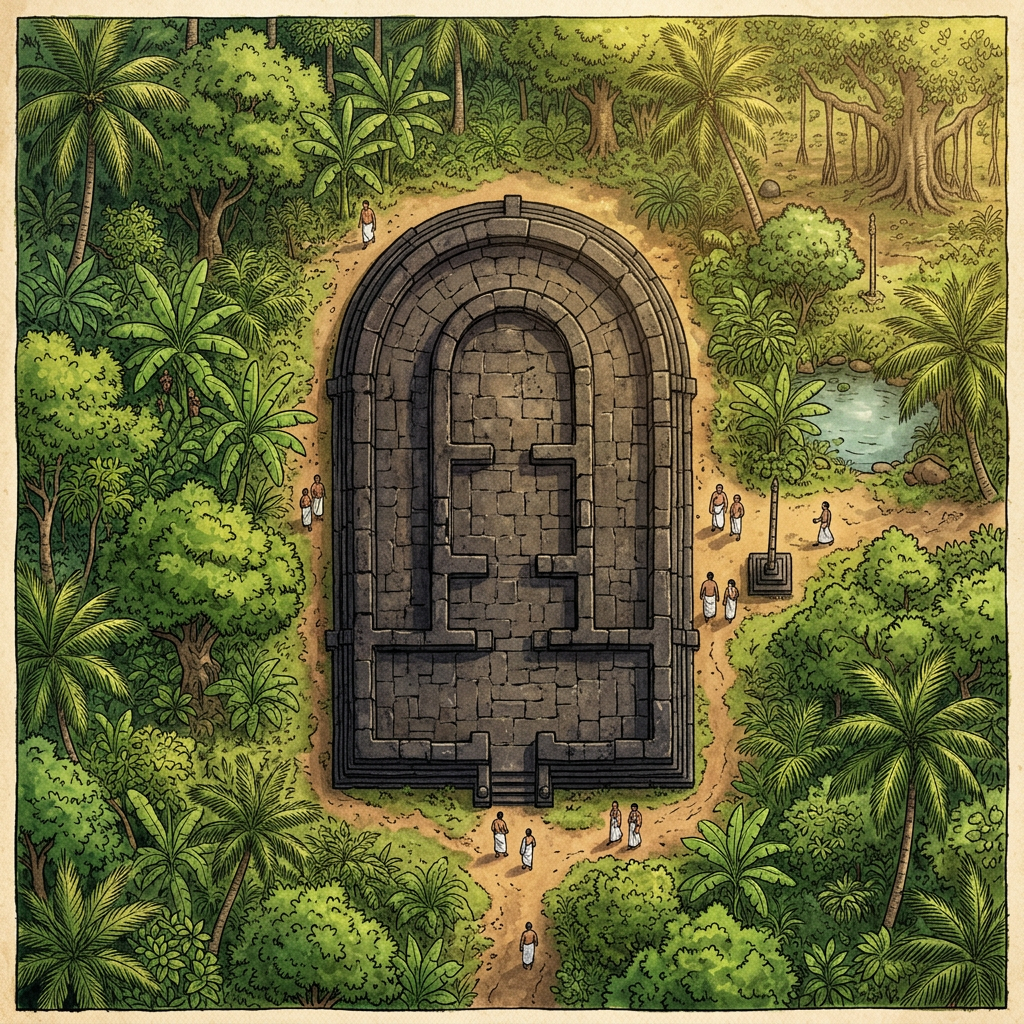
Archaeologists in Kerala have discovered the ruins of a rare structural temple belonging to the Ay Dynasty, an ancient lineage that ruled parts of southern India between the 7th and 10th centuries. The site in Pathanamthitta is particularly notable for its Gajaprishta (elephant-back) apsidal layout, a style that was once common in early South Indian sacred architecture but has largely vanished from the regional landscape.
The excavation has revealed a series of granite plinths and a central sanctum sanctorum that remains largely submerged in the local soil. Preliminary dating of the pottery shards and stone carvings found at the site suggests the temple was a center of early Shaivism, predating the massive expansion of the later Chera and Pandya architectural traditions in the Western Ghats.