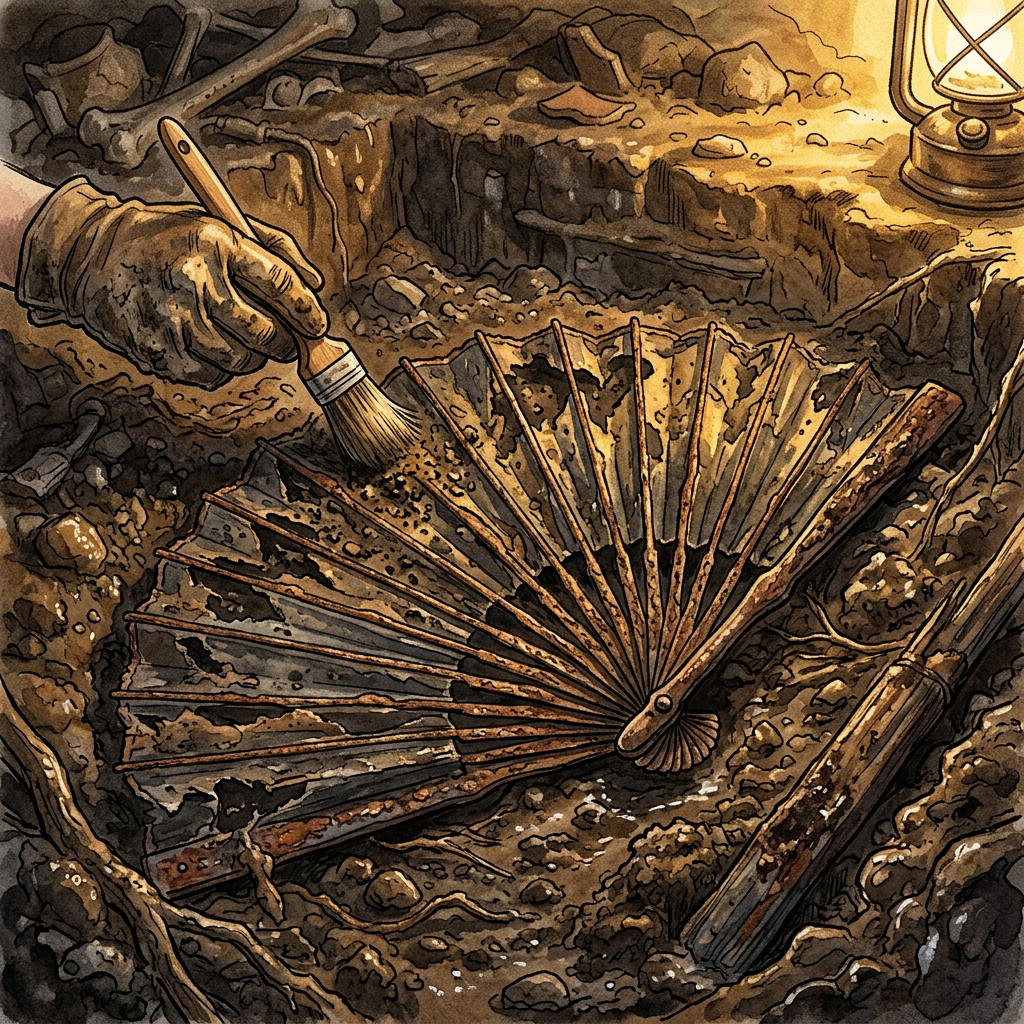
In a significant discovery for Japanese heritage, archaeologists in the Nara Prefecture have excavated several 'iron-threaded' ritual fans from a late 4th-century Kofun burial. These fans, constructed from delicate bamboo frames interwoven with fine iron wire, were found in the hands of a high-ranking individual. They are believed to be the earliest physical prototypes of the fans used in wind-calming ceremonies intended to prevent typhoons from destroying rice crops.
The presence of iron, a precious and symbolic material in the Kofun period, suggests that the management of 'ritual wind' was a crucial state function. The discovery links modern agricultural festivals (matsuri) to a deep history of techno-ritual innovation, where elite members of society utilized symbolic objects to mediate between the community and the volatile forces of nature. The fans represent a pivotal moment in the evolution of Japanese ceremonial performance.